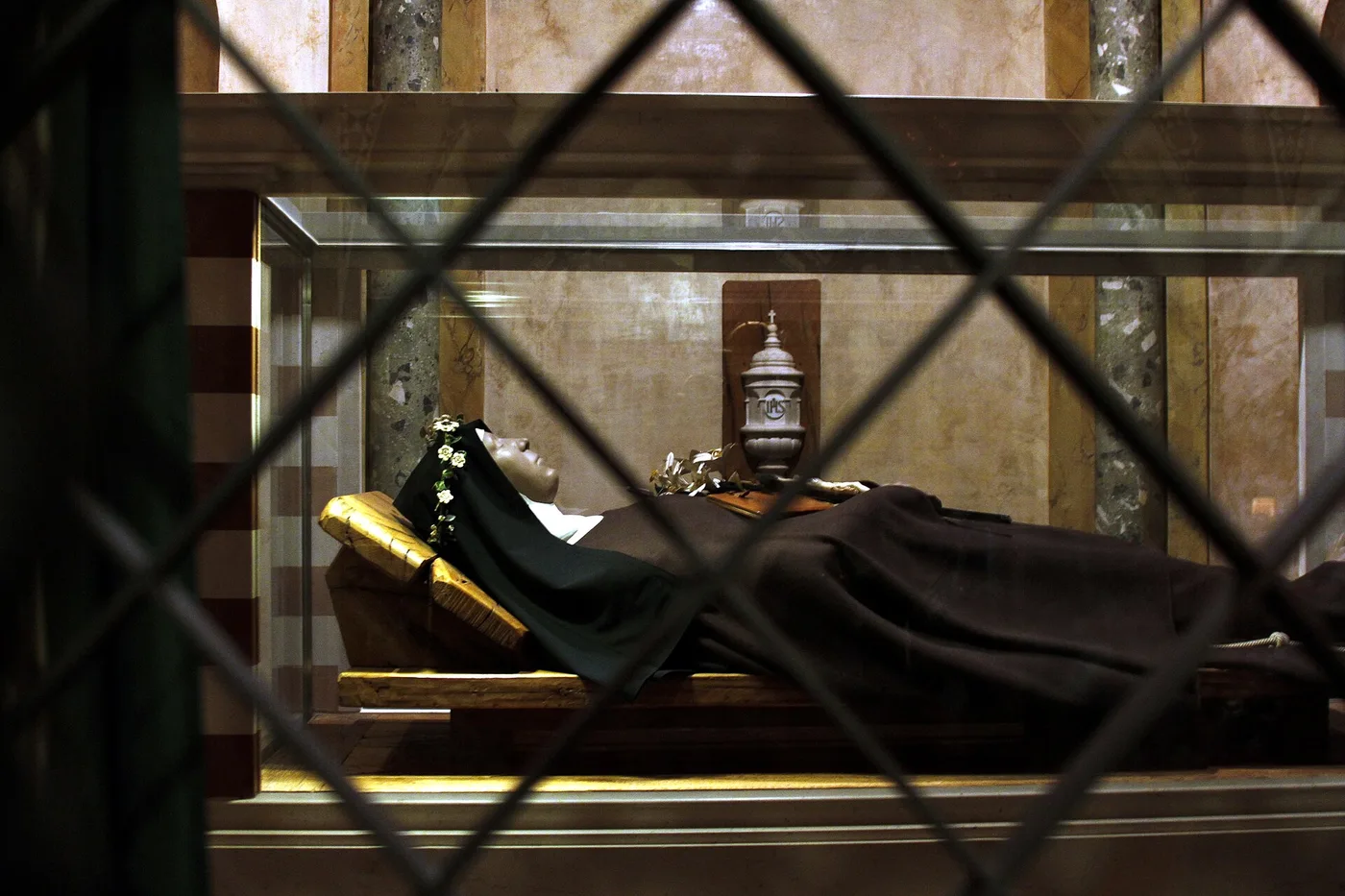
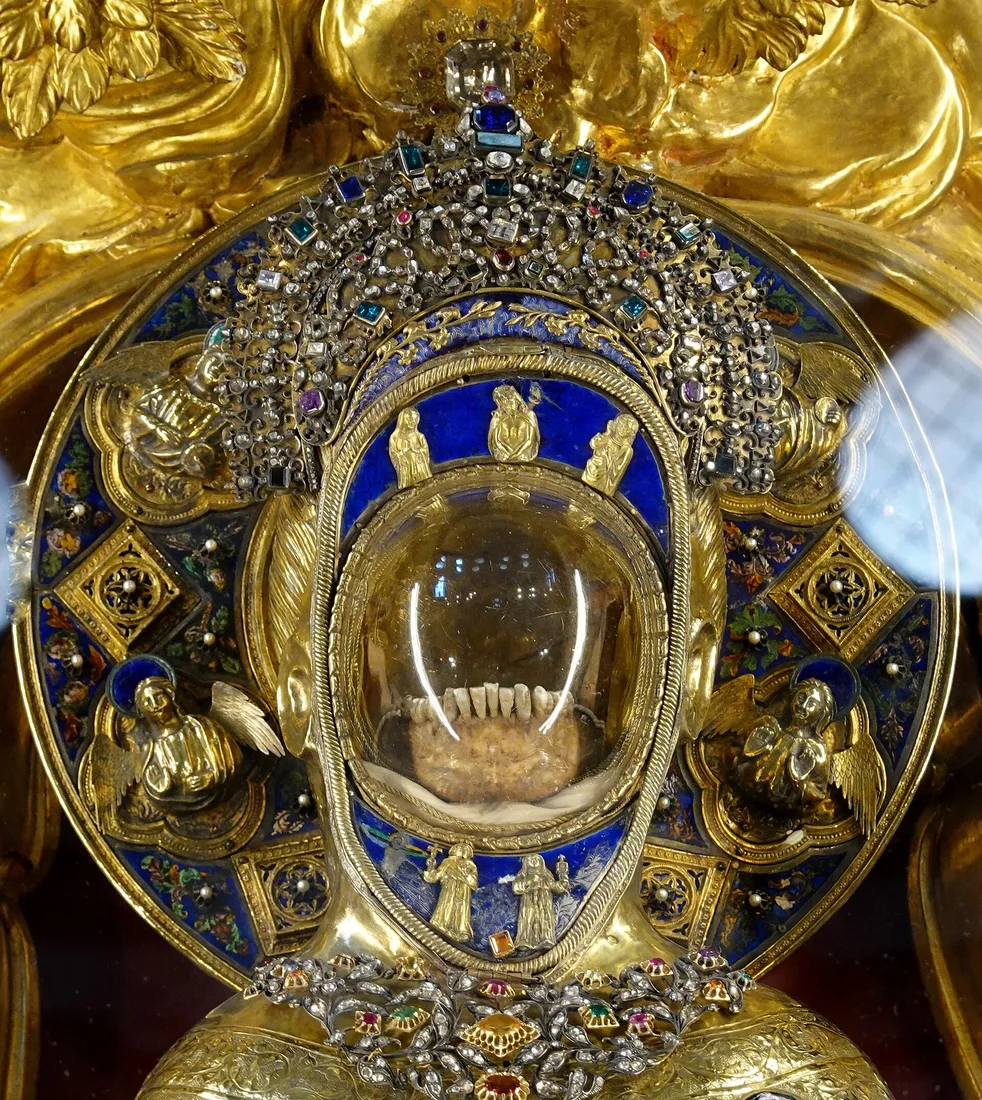
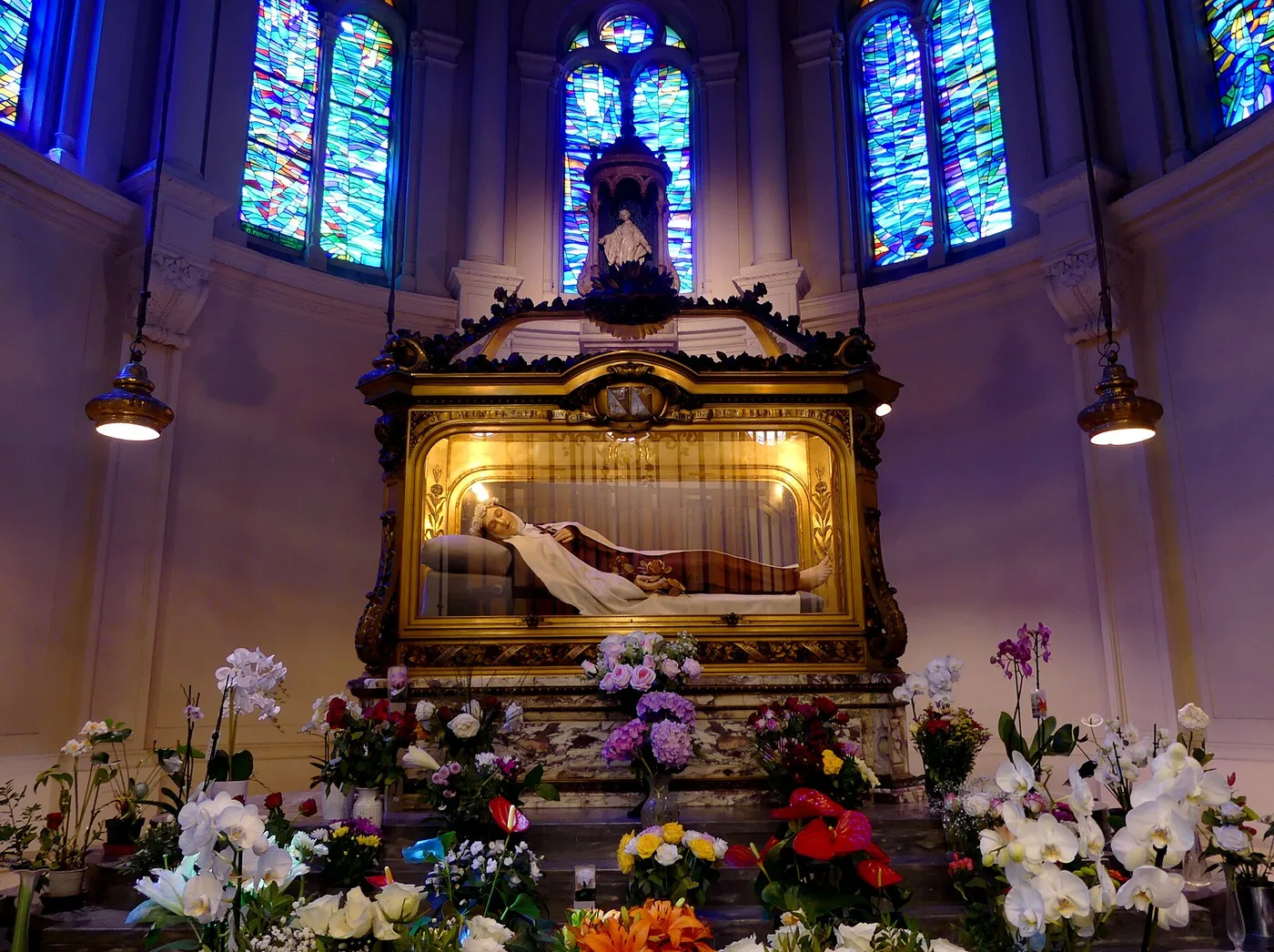
The châsse with Thérèse’s figure in the Lisieux Carmel chapel, photographed in July 2025. The figure and container should not be confused with a complete body.
The Solmoe shrine complex in 2014, commemorating Andrew Kim’s birthplace. This is not the burial site at Mirinae.
Korea.net / Korean Culture and Information Service (Jeon Han) · CC BY-SA 2.0 · Photo source · 13 May 2014 · Resized and converted to WebP. The source license continues to apply.Kahnawà:ke, Québec · Canada
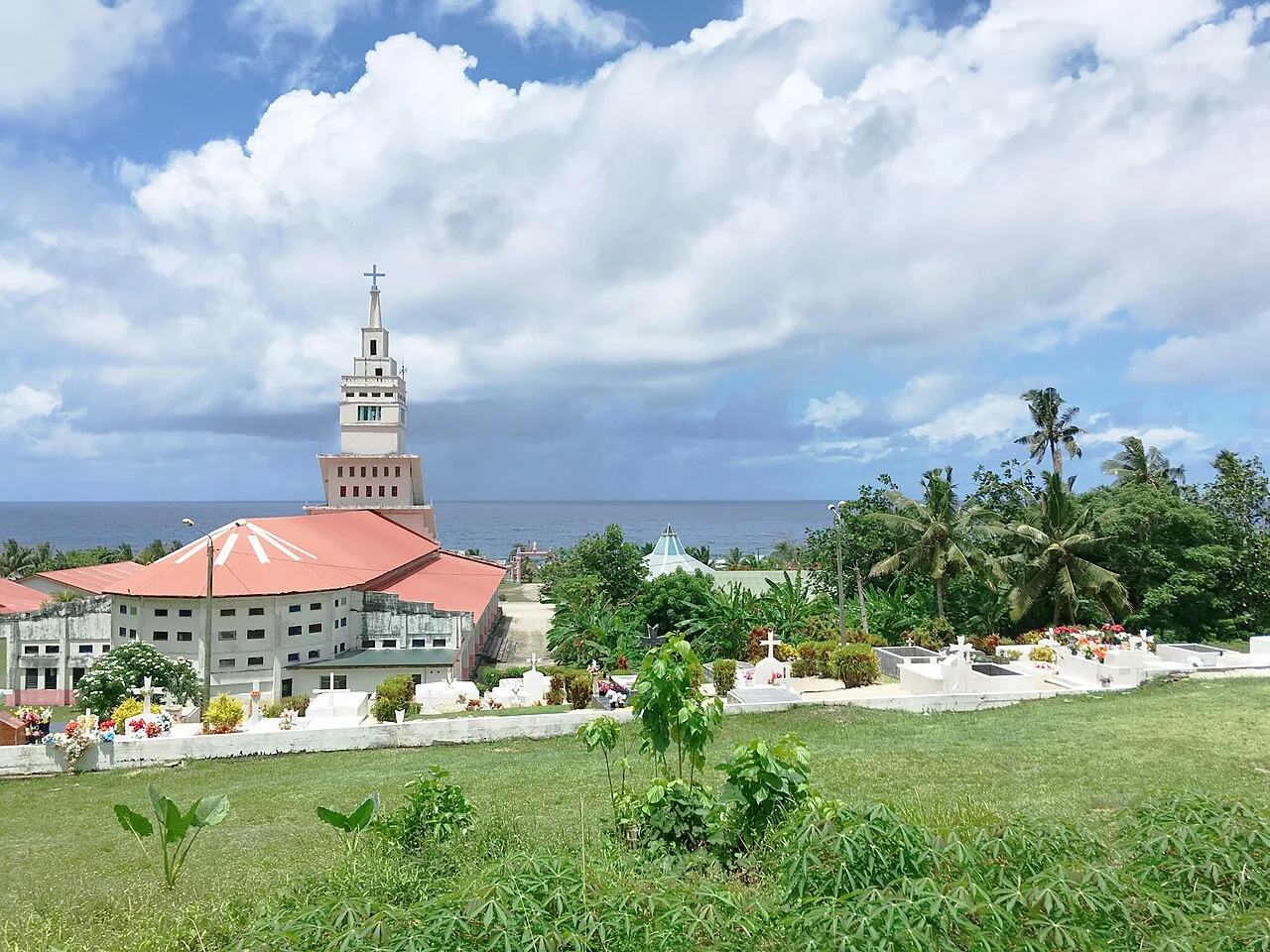
Saint-Pierre-Chanel Basilica at Poi, Futuna, photographed in 2018. The site associated in the Marist account with the principal relics’ return.
Vogensto · CC BY-SA 4.0 · Photo source · 24 November 2018 · Resized and converted to WebP. The source license continues to apply.
MUSEUM COLLECTION · AUTHENTIC 3D MODEL
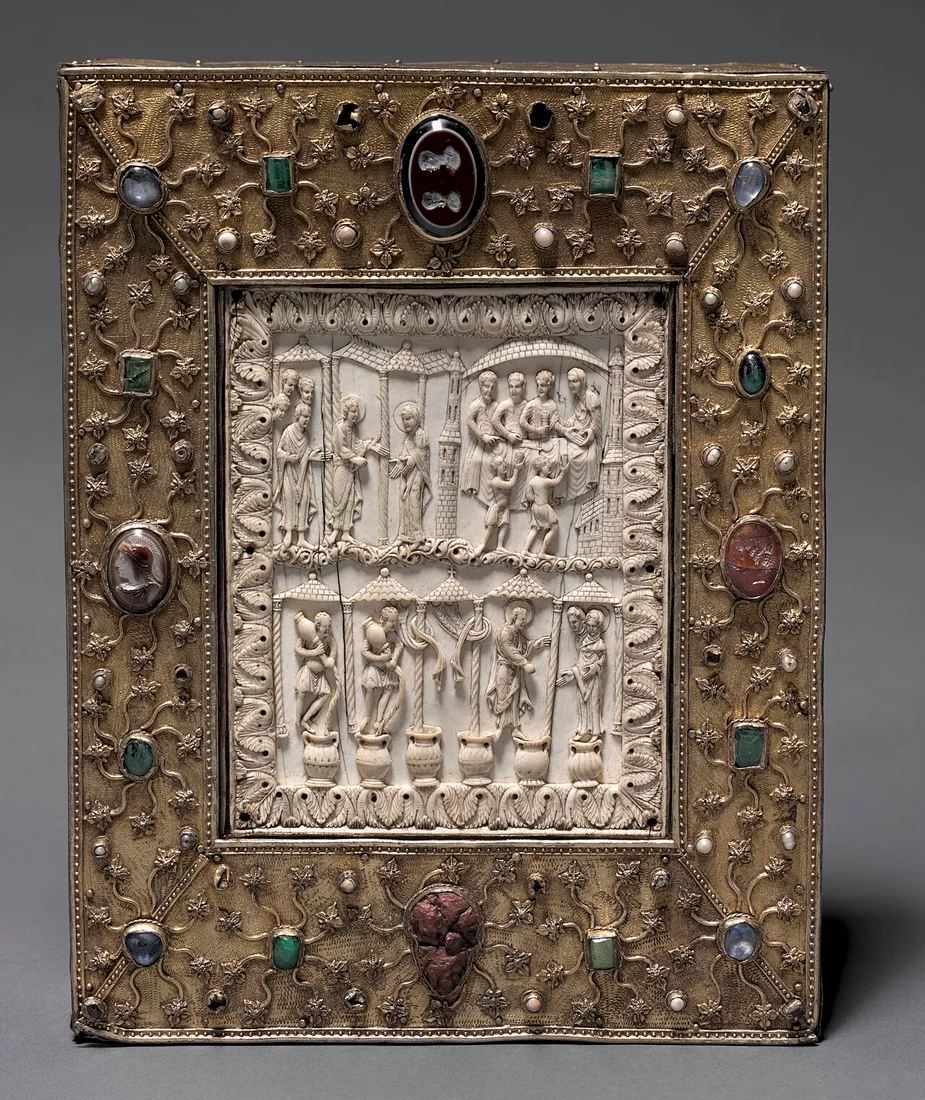
Book-shaped reliquary
A scan of Cleveland Museum of Art object 1930.741. The ivory dates to around 1000 and the frame is later. Rotate it to explore carved scenes, metal and stones. This is a reliquary-art example, not a model of the six saints’ relics.
Book-shaped reliquary, Cleveland Museum of Art, accession 1930.741. This teaching object is not presented as holding a relic of any of the six saints on this site.
After activation, the viewer loads from Sketchfab. Drag to rotate; scroll or pinch to zoom. The photograph remains available. Open viewer separately ↗
A SMALL GLOSSARY
Understand before drawing conclusions
Relic
In a Catholic context, relics include saints’ bodily remains and associated objects. The Church’s instruction distinguishes significant and smaller relics. A gold container’s appearance alone does not identify the relic’s type.
A container for preserving or presenting relics. Its form can be an artwork in its own right. The museum’s book-shaped example shows that a container need not resemble what it holds.
In a tomb history, translation means moving remains from one place to another, not changing the language of a text. Anthony’s custodian distinguishes several such transfers.
A Church procedure for examining and recording remains, documents and seals. An online photograph does not replace it. This site presents custodians’ reports rather than issuing certificates of authenticity.
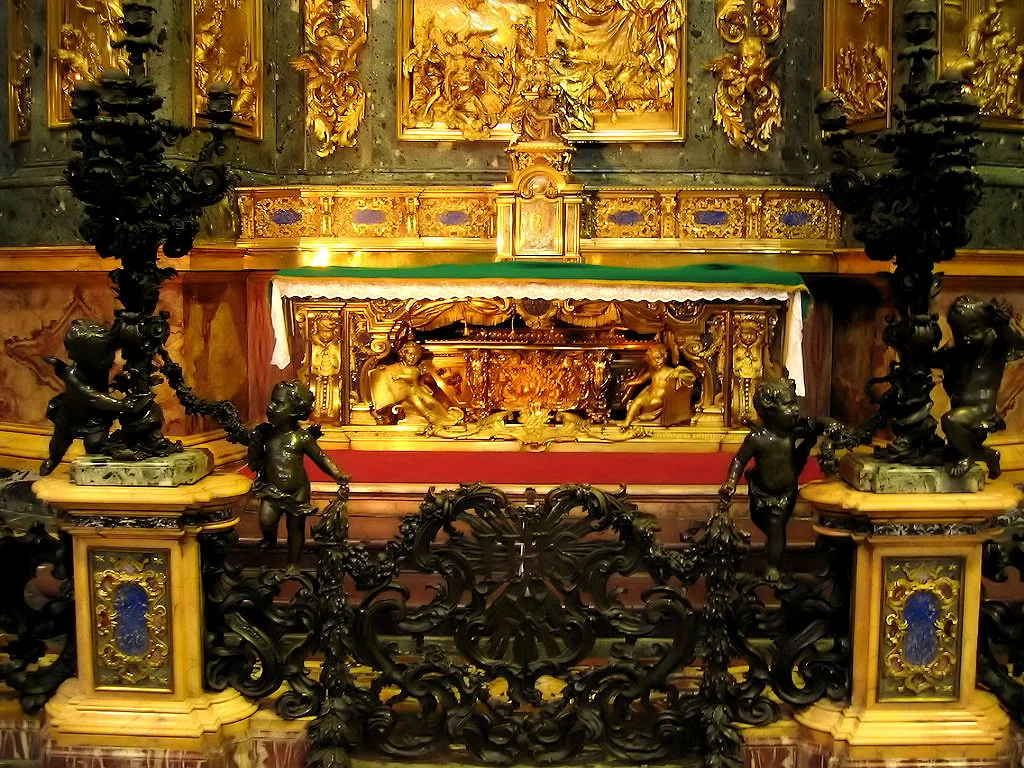
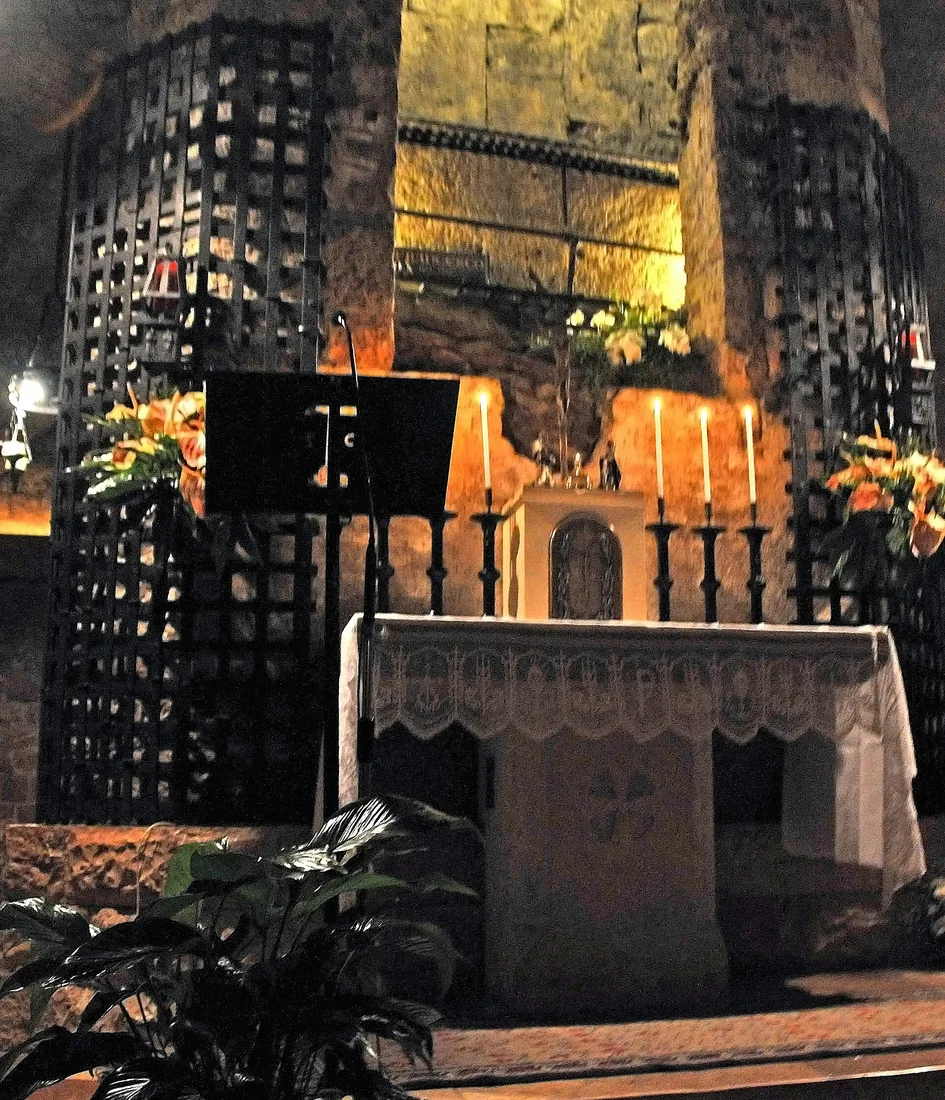
A crypt is a space within a building; a tomb is a burial place. In Assisi, the crypt provides the setting for Francis’s tomb. A room, altar or facade photograph does not automatically show a tomb’s contents.
Church recognition connected with a saint’s teaching. Thérèse received this title in 1997. It is not a medical qualification or evidence of a university degree in medicine.
Start with four questions: what is visible, who took the photograph, when was it taken, and where? Separate observation from the custodian’s description. A container photograph records an appearance at a particular time; it cannot alone prove contents, authenticity or visitor access today. The gallery brings captions, credits, available dates and source links together.
Saints’ stories can draw on letters, biographies, community records and devotional testimony, each written for different purposes. Follow chapter references and ask whether a statement is a historical date, an account of belief or a reflective question. Clare’s differing chronologies and the distinction between her remains and their container show why careful reading matters.
Atlas locations are also places of prayer and community homes. Check custodian information for access, photography and schedules. An online photograph does not mean every visitor may photograph from the same spot. Use the atlas to recognise the area, then consult official guidance for a visit; a city point is not navigation to an altar.
 Assisi · Italy