Among the Twelve chosen by Jesus, later handing him over to those arresting him. His story is read without confusing him with Jude Thaddaeus or judging his eternal fate.
Lifetime1st century; birth year unknown
End of life ScriptureMatthew 27 and Acts 1 provide two differing death accounts.
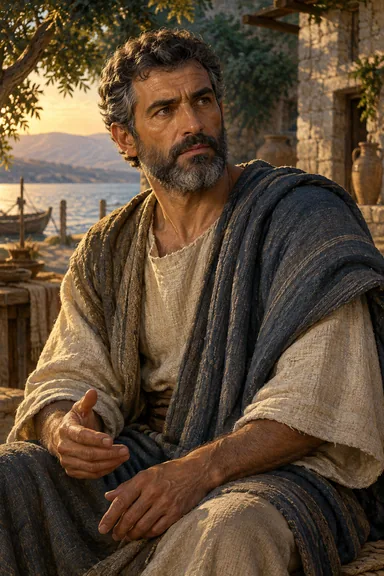
Artistic illustration · ImageGenArtistic interpretation; the historical likeness is unknown.
A JOURNEY THROUGH THE STORY
5 chapters. One journey.
Explore at your pace, or play the story to move between chapters every 12 seconds.
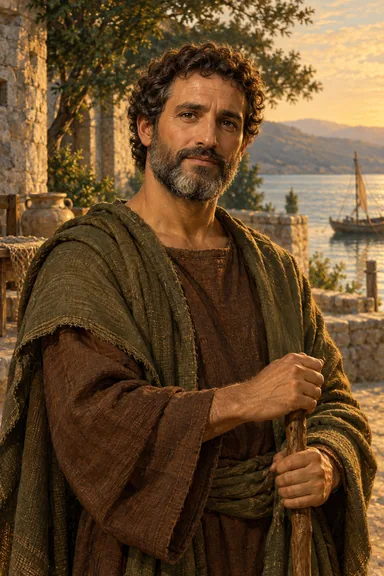
Artistic illustration · ImageGenArtistic imagination based on the account; not a reconstruction of events.
01 / 05Jesus’s ministry
One of the Twelve
Scripture
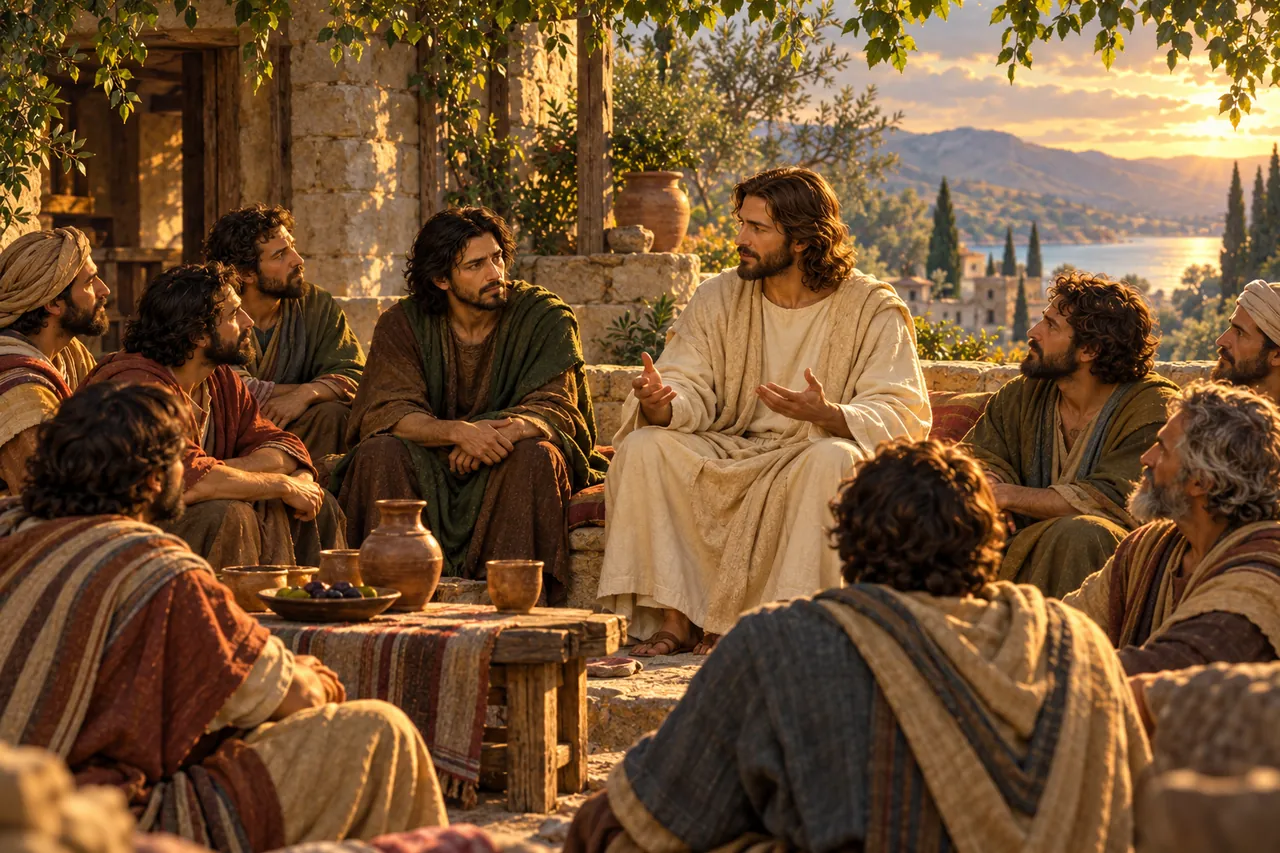
Luke 6:16 and Mark 3:19 include Judas Iscariot in Jesus’s chosen group. His individual calling is not narrated. His membership matters: the betrayal comes from within the disciples’ circle, not from a stranger.
Artistic illustration · ImageGenArtistic imagination based on the account; not a reconstruction of events.
02 / 05Jesus’s ministry
Responsibility and the problem of money
Scripture
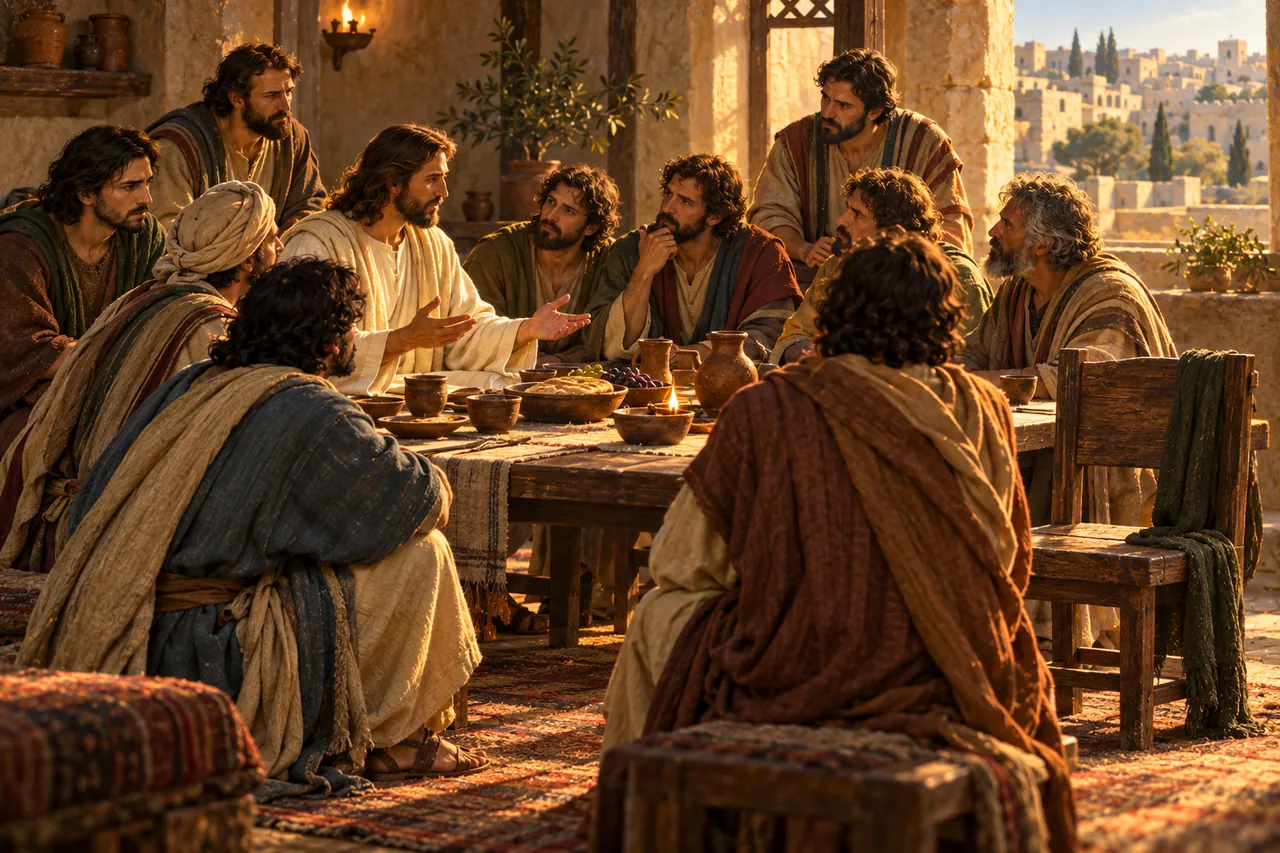
John 12:4–6 connects Judas with the group’s money and criticism of Jesus’s anointing. The Gospel also judges his conduct negatively. This narrative does not provide a complete psychological explanation of why he later betrays Jesus.
Artistic illustration · ImageGenArtistic imagination based on the account; not a reconstruction of events.
03 / 05Passion
The agreement and arrest
Scripture
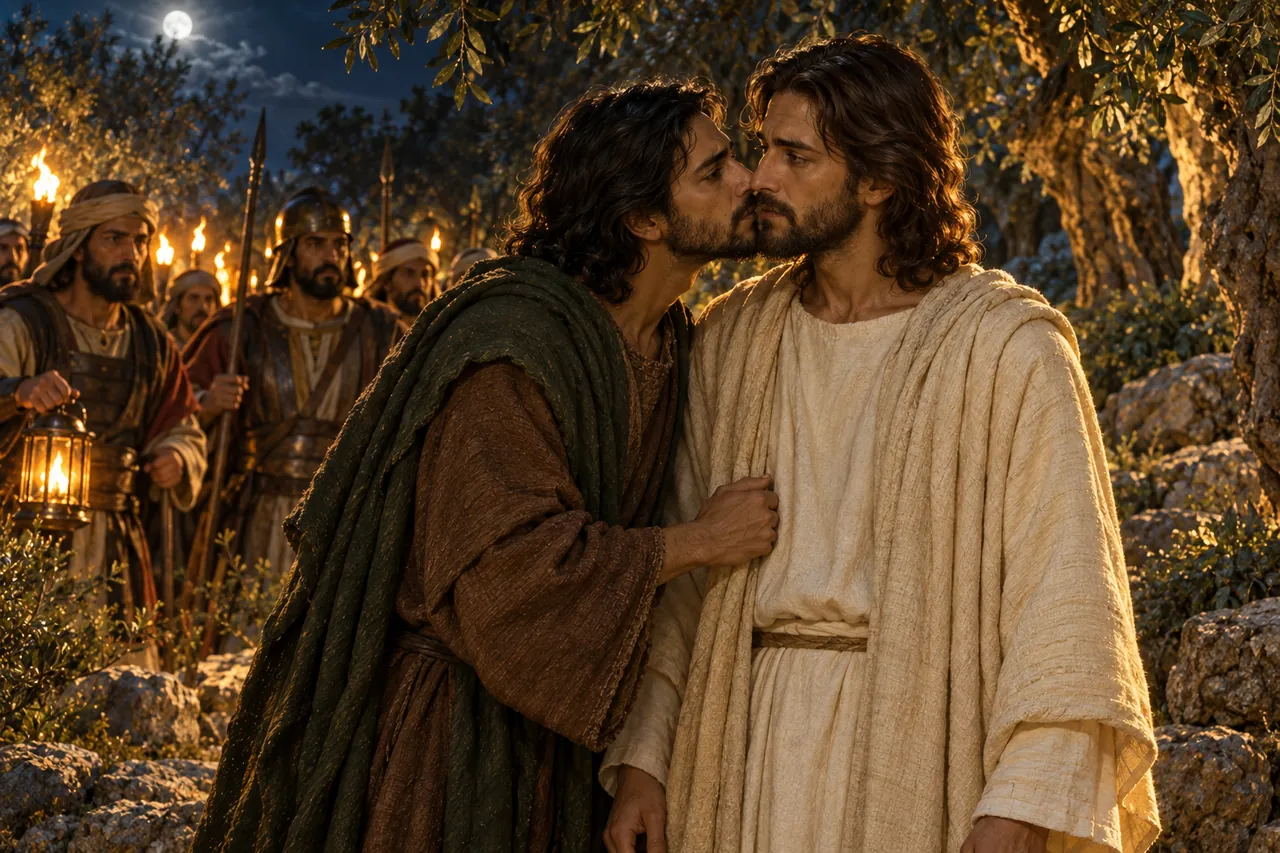
Matthew 26:14–16 records the agreement for thirty silver pieces. In 26:47–50, Judas arrives with the arresting group and uses a kiss as a signal. This summary adds no invented dialogue or motives beyond the source.
Artistic illustration · ImageGenArtistic imagination based on the account; not a reconstruction of events.
04 / 05End of life according to Matthew
Remorse in Matthew
Scripture
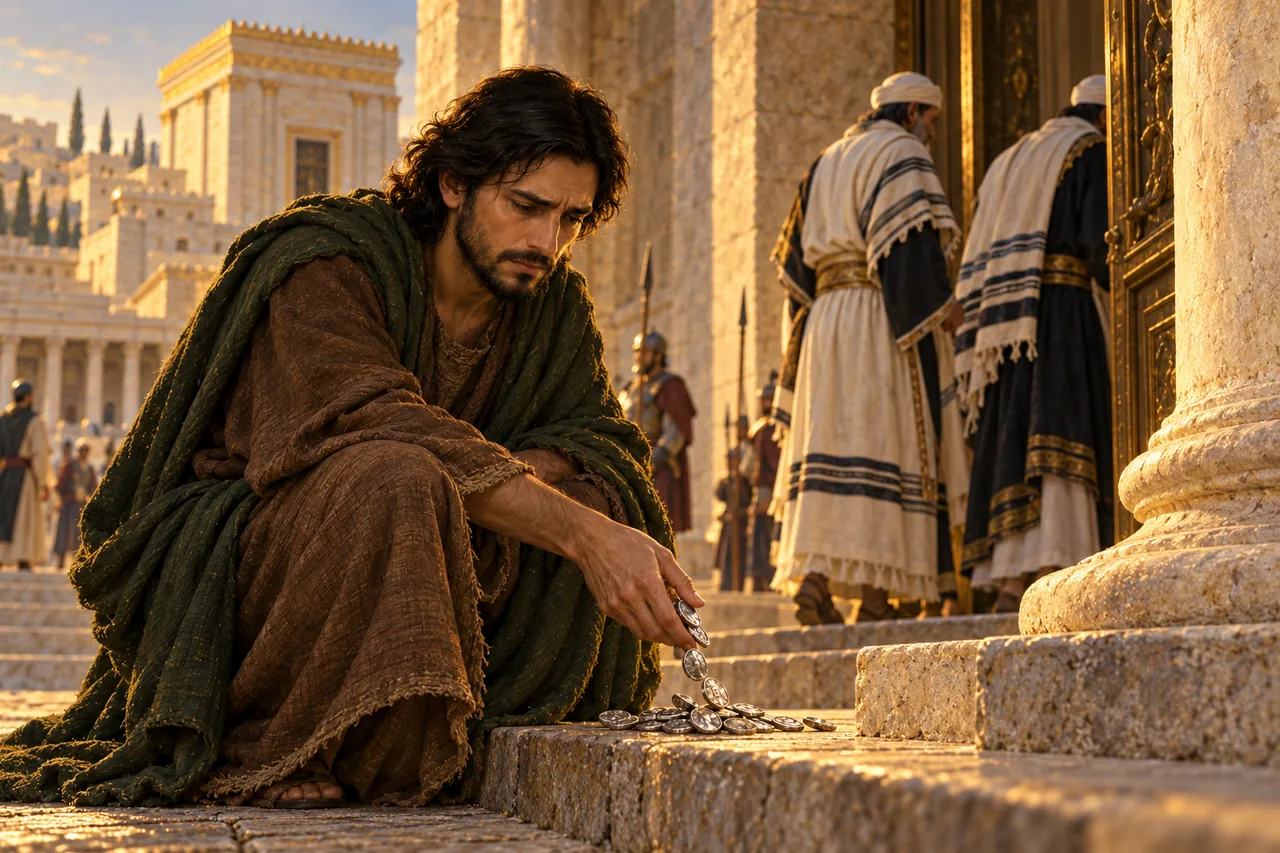
Matthew 27:3–5 recounts Judas’s remorse, return of the money and death by hanging. The account invites serious reflection on wrongdoing and despair. Benedict XVI cautions against taking over God’s judgement of his eternal fate.
Artistic illustration · ImageGenArtistic imagination based on the account; not a reconstruction of events.
05 / 05End of life according to Acts
Acts and replacement in ministry
Scripture
Acts 1:18–19 gives a different account of Judas’s death and the field associated with him. The chapter then narrates Matthias’s selection. Akeldama is a place associated with the narrative, not evidence of a securely identified grave or relic of Judas.
Jesus’s ministryArtistic illustration · ImageGenArtistic imagination based on the account; not a reconstruction of events.
Luke 6:16 and Mark 3:19 include Judas Iscariot in Jesus’s chosen group. His individual calling is not narrated. His membership matters: the betrayal comes from within the disciples’ circle, not from a stranger.
Jesus’s ministryArtistic illustration · ImageGenArtistic imagination based on the account; not a reconstruction of events.
John 12:4–6 connects Judas with the group’s money and criticism of Jesus’s anointing. The Gospel also judges his conduct negatively. This narrative does not provide a complete psychological explanation of why he later betrays Jesus.
PassionArtistic illustration · ImageGenArtistic imagination based on the account; not a reconstruction of events.
Matthew 26:14–16 records the agreement for thirty silver pieces. In 26:47–50, Judas arrives with the arresting group and uses a kiss as a signal. This summary adds no invented dialogue or motives beyond the source.
End of life according to MatthewArtistic illustration · ImageGenArtistic imagination based on the account; not a reconstruction of events.
Matthew 27:3–5 recounts Judas’s remorse, return of the money and death by hanging. The account invites serious reflection on wrongdoing and despair. Benedict XVI cautions against taking over God’s judgement of his eternal fate.
End of life according to ActsArtistic illustration · ImageGenArtistic imagination based on the account; not a reconstruction of events.
Acts 1:18–19 gives a different account of Judas’s death and the field associated with him. The chapter then narrates Matthias’s selection. Akeldama is a place associated with the narrative, not evidence of a securely identified grave or relic of Judas.
Judas Iscariot is not presented as a saint or martyr. His inner motives cannot be fully established. Matthew and Acts are retained as distinct accounts without a forced harmonisation. No verified relic location was established from the checked sources.
PRESENT-DAY LOCATIONS
Relics and places of remembrance
These attributions follow site custodians, not biological testing of identity. The locations are a selection, not an inventory of all fragments.
No relic location for Judas Iscariot can be included on the basis of the sources used. Akeldama in Acts 1 belongs to the narrative of his death; it is not proof of a tomb or relic.