A Mohawk woman with Algonquin family heritage. From the Mohawk River valley to a community near Montréal, her life brought together prayer and care for others.
Explore at your pace, or play the story to move between chapters every 12 seconds.
Artistic illustration · ImageGen · A visual companion, not a reconstruction of events.
01 / 06c. 1656–1660
Family in the Mohawk River valley
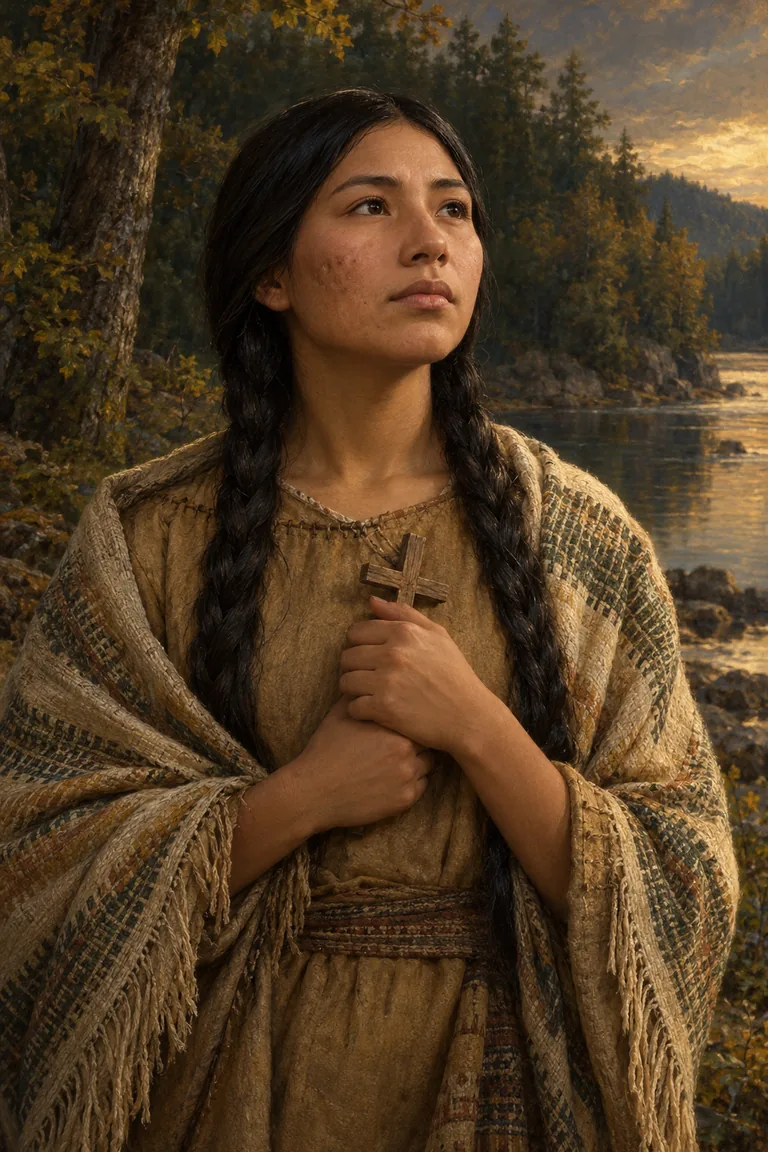
Kateri was born around 1656 in what is now New York State. Her father was Mohawk and her mother an Algonquin Christian. This family story brings together different languages, cultures and beliefs. She is remembered as a person rooted in local identity, rather than someone to detach from her Indigenous community.
Artistic illustration · ImageGen · A visual companion, not a reconstruction of events.
02 / 06c. 1660–1676
Growing up after loss
A smallpox epidemic during her childhood took her parents and younger brother. Kateri survived with scarring and impaired vision and was raised by relatives. Loss provides context for her life without defining her entire identity: she continued learning, working, forming relationships and making personal choices.
Artistic illustration · ImageGen · A visual companion, not a reconstruction of events.
03 / 061676
Choosing baptism
Kateri received baptism at Easter in 1676. Church accounts remember tensions surrounding her choice. Relationships among family, customs and religion in the colonial period were complex. This story therefore does not portray all Mohawk people as opponents, but focuses on a woman’s decision within difficult circumstances.
Artistic illustration · ImageGen · A visual companion, not a reconstruction of events.
04 / 061677–1680
Finding a new community
She moved to a Mohawk community at a Jesuit mission near Montréal. There prayer accompanied work and care for sick and elderly people. Kateri also helped children learn to pray. Her life shows service close to home: being present to neighbours and fulfilling everyday responsibilities, as well as more visible acts.
Artistic illustration · ImageGen · A visual companion, not a reconstruction of events.
05 / 061680–2012
A short life, a lasting memory
Kateri died on 17 April 1680, aged about 24. Veneration continued far beyond her original community. Benedict XVI canonized her on 21 October 2012. She became the first Indigenous North American woman canonized by the Catholic Church, a description of a formal Church act rather than a ranking of human dignity.
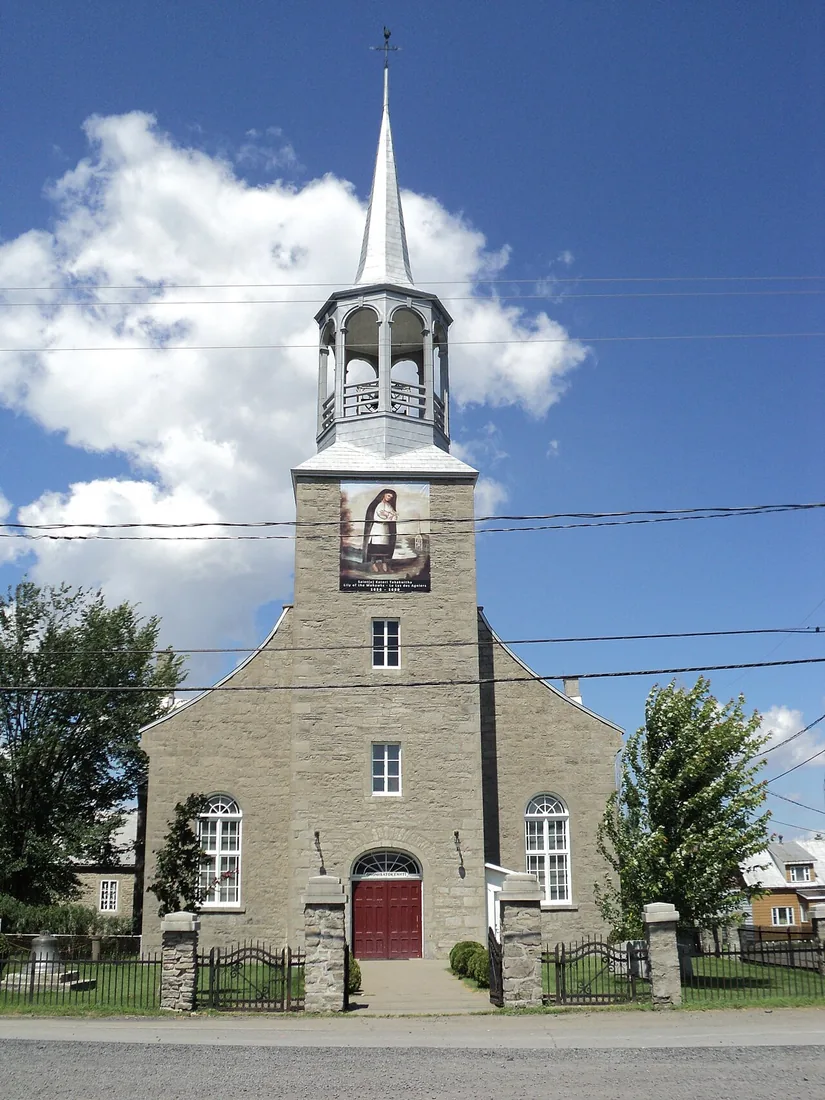
The church at Kahnawà:ke housing Kateri’s shrine. The capture date is unrecorded; the date below is the source upload date.
Nastya777 · CC0 · Photo source · Uploaded 17 August 2013 · Resized and converted to WebP. The source license continues to apply.
06 / 06Today
A tomb on Mohawk territory
Kateri’s tomb can now be visited at Saint Francis Xavier Mission in Kahnawà:ke, Québec. This national shrine stands on Mohawk territory. The visible complex dates from after Kateri’s life. Exploring it introduces Catholic heritage, community history and the continuing presence of Indigenous people along the Saint Lawrence River.
Kateri was born around 1656 in what is now New York State. Her father was Mohawk and her mother an Algonquin Christian. This family story brings together different languages, cultures and beliefs. She is remembered as a person rooted in local identity, rather than someone to detach from her Indigenous community.
A smallpox epidemic during her childhood took her parents and younger brother. Kateri survived with scarring and impaired vision and was raised by relatives. Loss provides context for her life without defining her entire identity: she continued learning, working, forming relationships and making personal choices.
Kateri received baptism at Easter in 1676. Church accounts remember tensions surrounding her choice. Relationships among family, customs and religion in the colonial period were complex. This story therefore does not portray all Mohawk people as opponents, but focuses on a woman’s decision within difficult circumstances.
She moved to a Mohawk community at a Jesuit mission near Montréal. There prayer accompanied work and care for sick and elderly people. Kateri also helped children learn to pray. Her life shows service close to home: being present to neighbours and fulfilling everyday responsibilities, as well as more visible acts.
Kateri died on 17 April 1680, aged about 24. Veneration continued far beyond her original community. Benedict XVI canonized her on 21 October 2012. She became the first Indigenous North American woman canonized by the Catholic Church, a description of a formal Church act rather than a ranking of human dignity.
Kateri’s tomb can now be visited at Saint Francis Xavier Mission in Kahnawà:ke, Québec. This national shrine stands on Mohawk territory. The visible complex dates from after Kateri’s life. Exploring it introduces Catholic heritage, community history and the continuing presence of Indigenous people along the Saint Lawrence River.
How can you honour someone’s identity while learning about their beliefs? Begin by listening to their name, family story, and understanding of their own community.
Much testimony about Kateri survives through missionary records; Indigenous experiences cannot be reduced to that perspective alone. Mission names and locations changed over time. The present church at Kahnawà:ke was built after her lifetime, rather than being the building she attended in the 1670s. Miracle narratives are devotional testimony.
Traces of a legacy
A legacy you can trace
Kahnawà:ke, Québec · Canada
Saint Francis Xavier Mission · National Saint Kateri Shrine
Location reported by institutional sources
The church at Kahnawà:ke housing Kateri’s shrine. The capture date is unrecorded; the date below is the source upload date.
Nastya777 · CC0 · Photo source · Uploaded 17 August 2013 · Resized and converted to WebP. The source license continues to apply.
The national shrine on Mohawk territory in Kahnawà:ke. Its custodian welcomes visitors to Kateri’s tomb at Saint Francis Xavier Church; the present church postdates her life.