Explore at your pace, or play the story to move between chapters every 12 seconds.
Artistic illustration · ImageGen · A visual companion, not a reconstruction of events.
01 / 061181/1182–1202
From commerce to conflict
Born into an Assisi cloth merchant’s family, young Francis imagined a life of honour. War with Perugia in 1202 brought captivity. Illness and recovery gradually changed his direction: his story begins with uncertainty rather than a ready-made vocation.
Artistic illustration · ImageGen · A visual companion, not a reconstruction of events.
02 / 061205–1206
San Damiano and a simpler life
Franciscan tradition connects his conversion with the crucifix at San Damiano. He repaired churches and served people excluded because of leprosy. Renouncing his inheritance before the bishop marked a break with family status. The speaking crucifix belongs to religious testimony, not a modern recording.
Artistic illustration · ImageGen · A visual companion, not a reconstruction of events.
03 / 061209–1219
A fraternity beyond Assisi
Companions formed a community around him. In 1209 he approached Innocent III with a Gospel-based way of life. In 1219 he met Sultan al-Malik al-Kamil during the Crusades. This encounter places his story within relations across religious boundaries as well as personal prayer.
Artistic illustration · ImageGen · A visual companion, not a reconstruction of events.
04 / 061223
Greccio: making Christmas tangible
At Greccio in 1223, a manger helped people contemplate Christ’s birth. In the same year, Honorius III approved the definitive Rule. These events reveal both Francis’s capacity to make a story tangible and the need to give a growing community a lasting structure.
Artistic illustration · ImageGen · A visual companion, not a reconstruction of events.
05 / 061224–1226
Song, suffering and the end of life
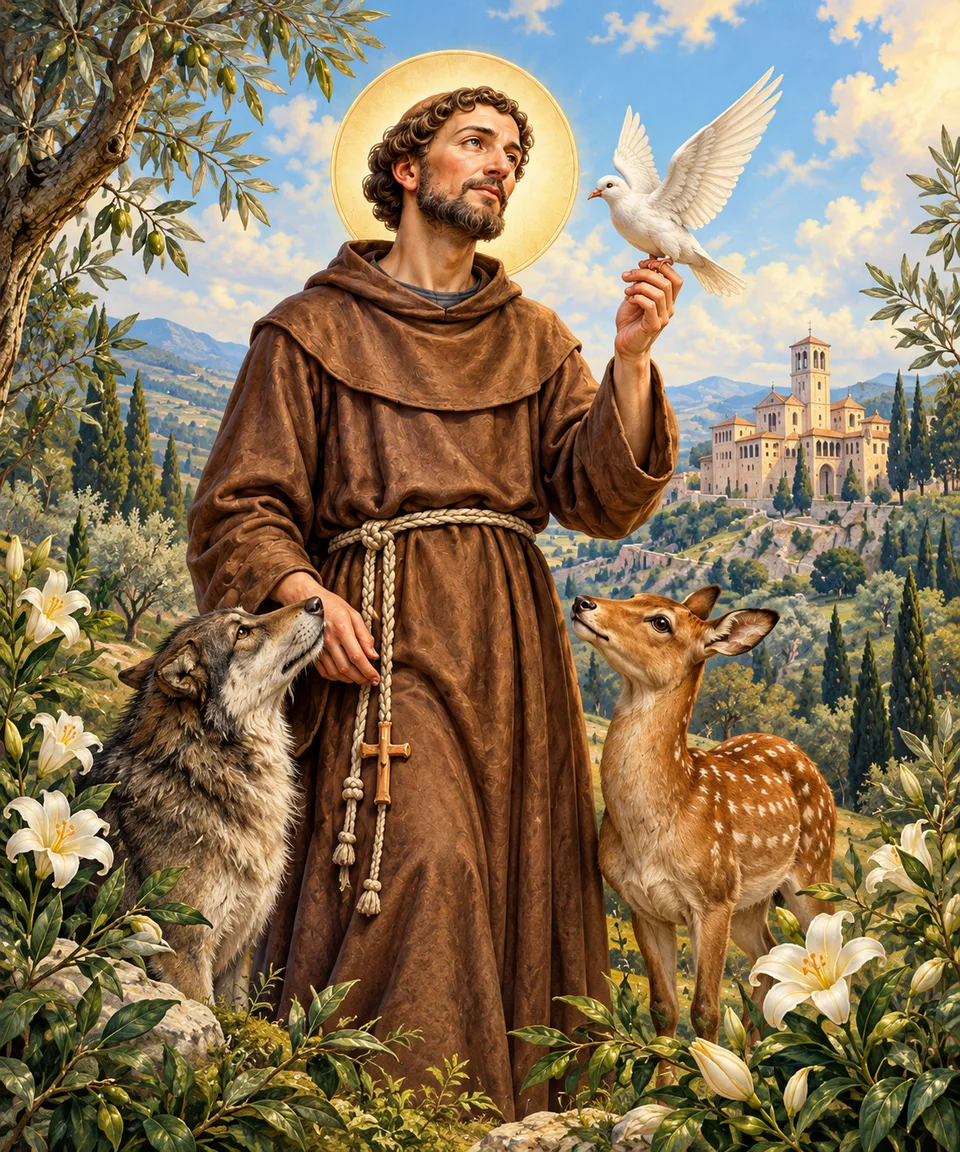
The order records the stigmata at La Verna in 1224 as part of its religious tradition. As his health and sight deteriorated, Francis composed the Canticle of Brother Sun. He died at the Porziuncola on the evening of 3 October 1226. His canticle turns attention toward creation.
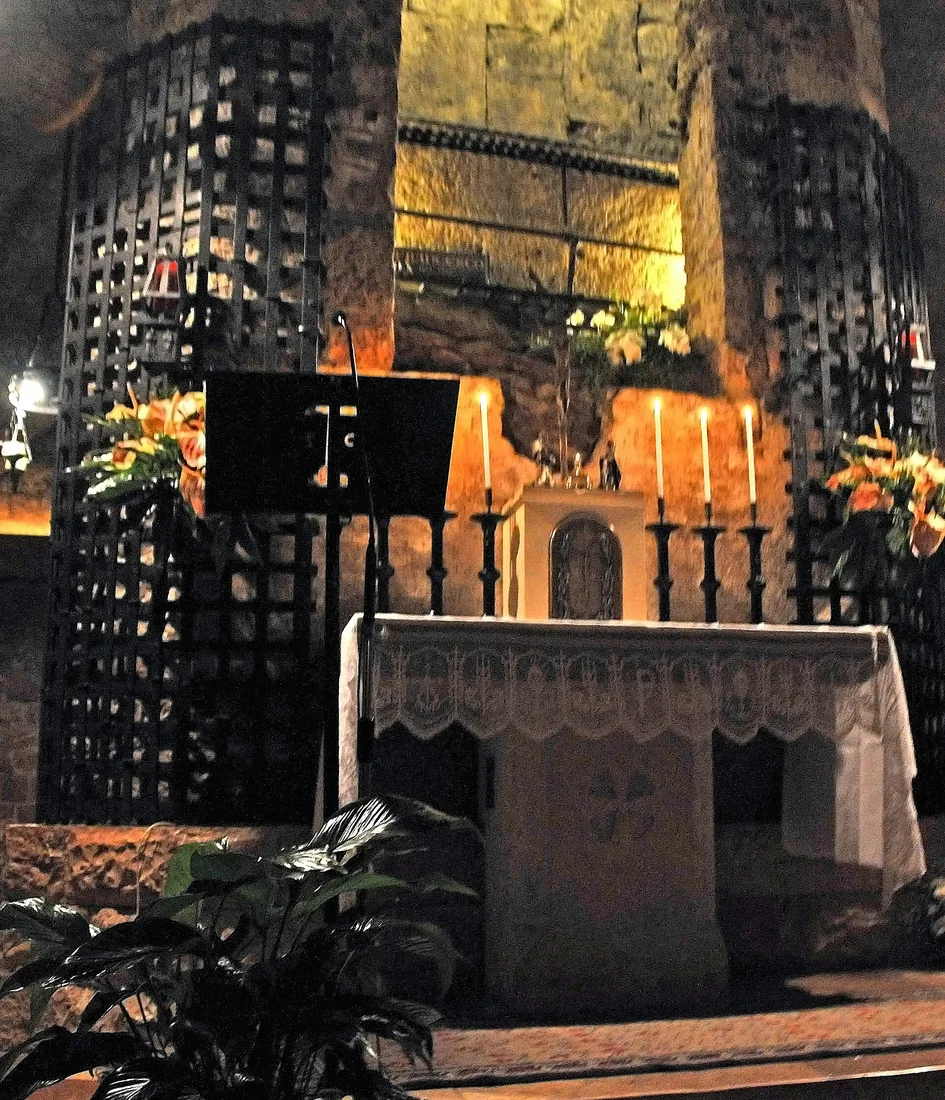
Canonization followed in 1228; his remains were transferred to the new basilica in 1230. The tomb and church art became places of remembrance. The scheduled February–March 2026 exposition was a special event, not a promise of permanent open display. A tomb photograph does not show everything contained within it.
Born into an Assisi cloth merchant’s family, young Francis imagined a life of honour. War with Perugia in 1202 brought captivity. Illness and recovery gradually changed his direction: his story begins with uncertainty rather than a ready-made vocation.
Franciscan tradition connects his conversion with the crucifix at San Damiano. He repaired churches and served people excluded because of leprosy. Renouncing his inheritance before the bishop marked a break with family status. The speaking crucifix belongs to religious testimony, not a modern recording.
Companions formed a community around him. In 1209 he approached Innocent III with a Gospel-based way of life. In 1219 he met Sultan al-Malik al-Kamil during the Crusades. This encounter places his story within relations across religious boundaries as well as personal prayer.
At Greccio in 1223, a manger helped people contemplate Christ’s birth. In the same year, Honorius III approved the definitive Rule. These events reveal both Francis’s capacity to make a story tangible and the need to give a growing community a lasting structure.
The order records the stigmata at La Verna in 1224 as part of its religious tradition. As his health and sight deteriorated, Francis composed the Canticle of Brother Sun. He died at the Porziuncola on the evening of 3 October 1226. His canticle turns attention toward creation.
Canonization followed in 1228; his remains were transferred to the new basilica in 1230. The tomb and church art became places of remembrance. The scheduled February–March 2026 exposition was a special event, not a promise of permanent open display. A tomb photograph does not show everything contained within it.
Francis changed his relationship with property, family and fraternity. How does chosen simplicity differ from hardship that is not chosen? Consider responsibility to others alongside personal freedom. This is a reflection, not a required answer.