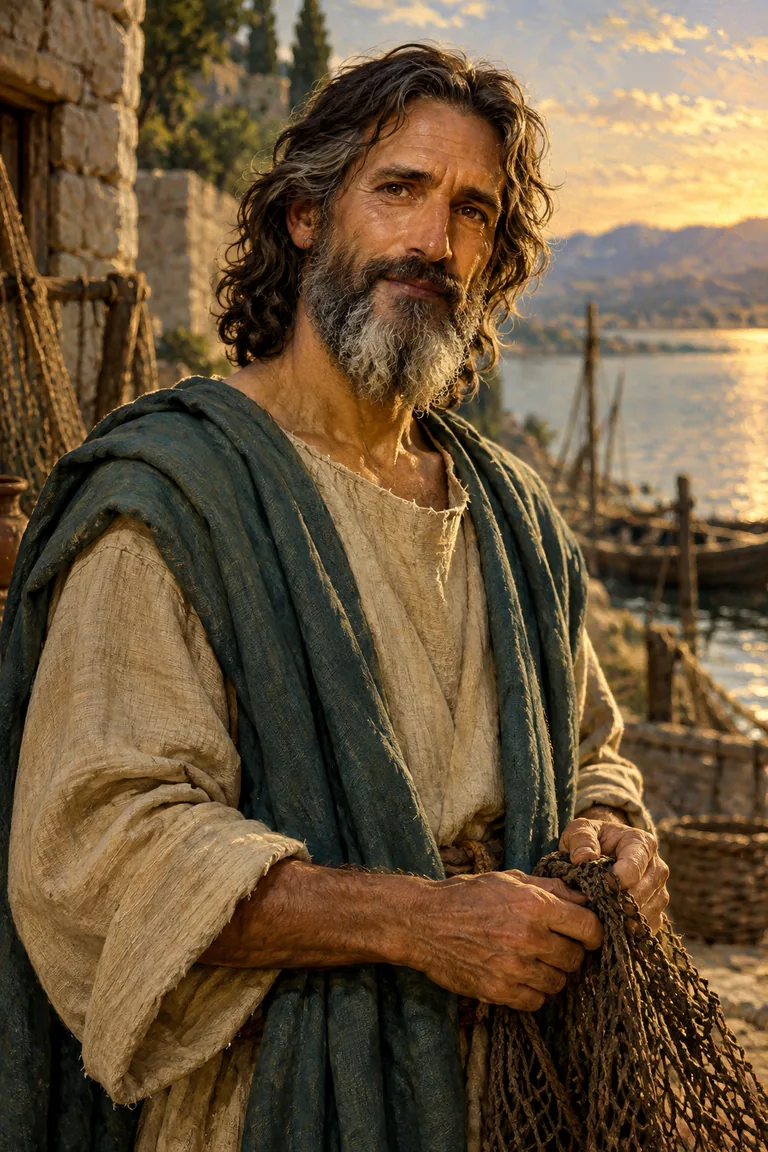
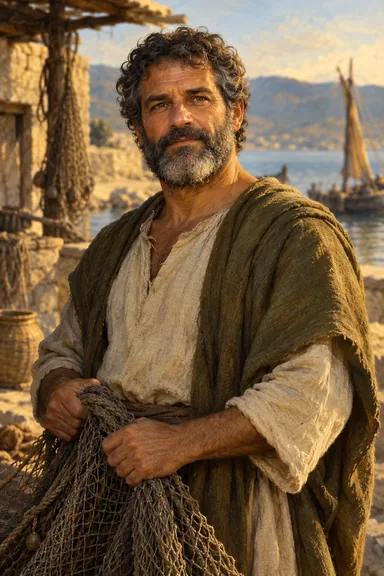
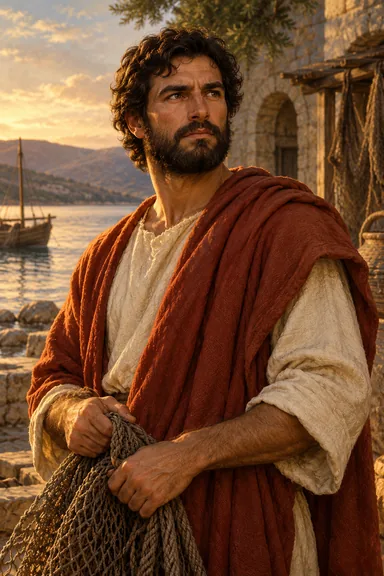
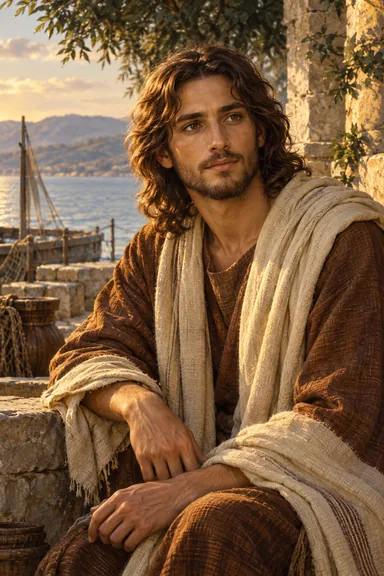
Artistic illustration · ImageGenArtistic interpretation; the historical likeness is unknown.
A JOURNEY THROUGH THE STORY
5 chapters. One journey.
Explore at your pace, or play the story to move between chapters every 12 seconds.
Artistic illustration · ImageGenArtistic imagination based on the account; not a reconstruction of events.
01 / 05Jesus’s ministry
A disciple of John meets Jesus
Scripture
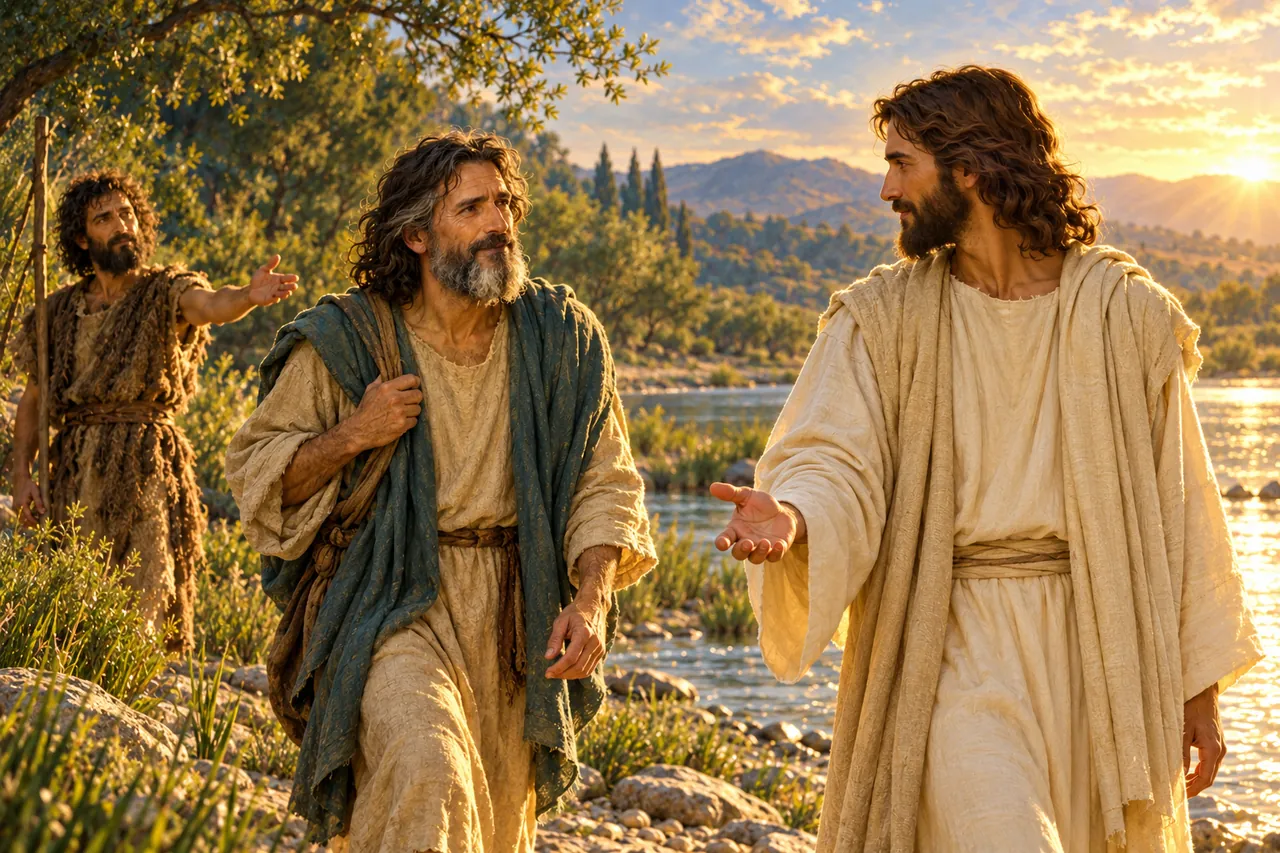
John 1:35–42 introduces Andrew as someone who hears John the Baptist’s witness and follows Jesus. He then finds Simon and brings him to the Teacher. This beginning introduces a recurring pattern: Andrew invites others to encounter Jesus.
Artistic illustration · ImageGenArtistic imagination based on the account; not a reconstruction of events.
02 / 05Jesus’s ministry
Five loaves and two fish
Scripture
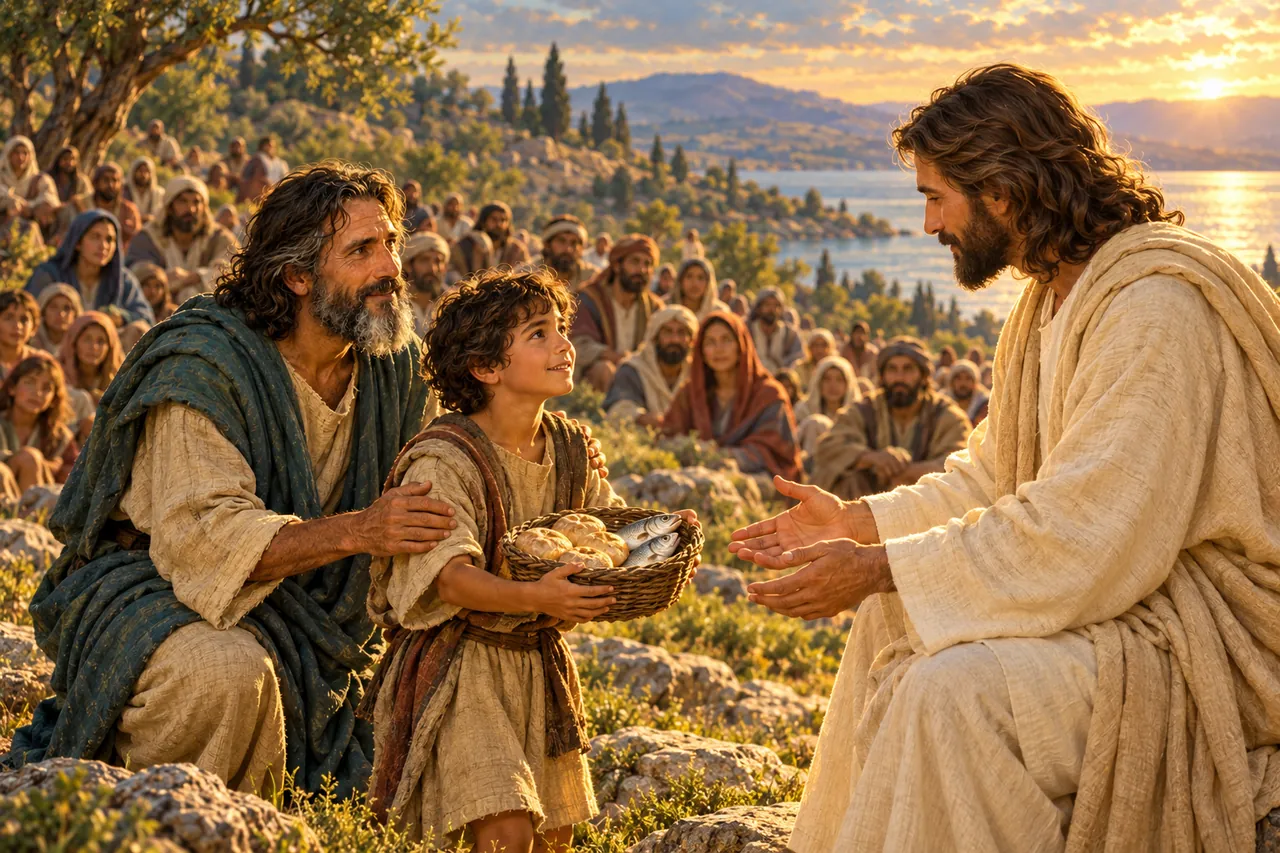
In John 6:8–9, Andrew points out a boy with bread and fish, recognising how little it is for the crowd. In the feeding narrative he brings an ordinary, limited resource to Jesus’s attention.
Artistic illustration · ImageGenArtistic imagination based on the account; not a reconstruction of events.
03 / 05Before the Passion
Passing on the pilgrims’ request
Scripture
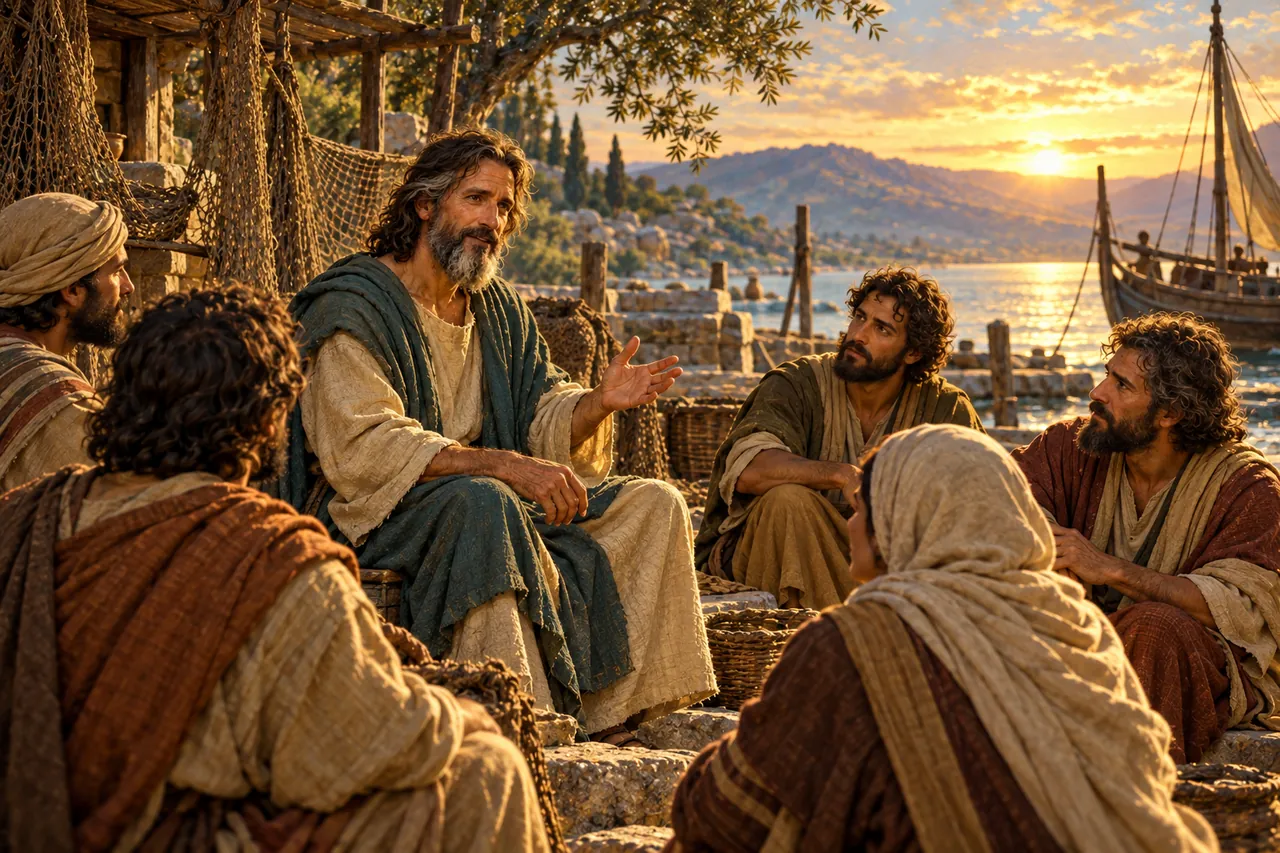
John 12:20–22 tells of Greeks wishing to meet Jesus. Philip approaches Andrew, and together they convey the request. This episode before the Passion shows them as intermediaries; it does not establish the countries Andrew later visited.
Artistic illustration · ImageGenSymbolic illustration for tradition or uncertain details.
04 / 05Early Church and later tradition
From Jerusalem to mission traditions
Tradition
Andrew appears among the apostles in Acts 1:13. Post-New Testament sources associate his mission with eastern regions and the Greek world. Detailed devotional maps should not be treated as journeys fully documented in Scripture.
Artistic illustration · ImageGenSymbolic illustration for tradition or uncertain details.
05 / 05End of life · date uncertain
Patras and the martyrdom tradition
Tradition
Church tradition associates Andrew’s death with crucifixion at Patras. The cathedral’s own account explains that the X shape emerged in medieval tradition. Scripture gives no date or death narrative. This venerated account is presented as tradition, with its chronological limits explicit.
Jesus’s ministryArtistic illustration · ImageGenArtistic imagination based on the account; not a reconstruction of events.
John 1:35–42 introduces Andrew as someone who hears John the Baptist’s witness and follows Jesus. He then finds Simon and brings him to the Teacher. This beginning introduces a recurring pattern: Andrew invites others to encounter Jesus.
Jesus’s ministryArtistic illustration · ImageGenArtistic imagination based on the account; not a reconstruction of events.
In John 6:8–9, Andrew points out a boy with bread and fish, recognising how little it is for the crowd. In the feeding narrative he brings an ordinary, limited resource to Jesus’s attention.
Before the PassionArtistic illustration · ImageGenArtistic imagination based on the account; not a reconstruction of events.
John 12:20–22 tells of Greeks wishing to meet Jesus. Philip approaches Andrew, and together they convey the request. This episode before the Passion shows them as intermediaries; it does not establish the countries Andrew later visited.
Early Church and later traditionArtistic illustration · ImageGenSymbolic illustration for tradition or uncertain details.
Andrew appears among the apostles in Acts 1:13. Post-New Testament sources associate his mission with eastern regions and the Greek world. Detailed devotional maps should not be treated as journeys fully documented in Scripture.
End of life · date uncertainArtistic illustration · ImageGenSymbolic illustration for tradition or uncertain details.
Church tradition associates Andrew’s death with crucifixion at Patras. The cathedral’s own account explains that the X shape emerged in medieval tradition. Scripture gives no date or death narrative. This venerated account is presented as tradition, with its chronological limits explicit.
Protoclete means first-called in Andrew’s tradition. The X-shaped cross belongs to later tradition, not a Gospel detail. Relics are reported in more than one city.
PRESENT-DAY LOCATIONS
Relics and places of remembrance
These attributions follow site custodians, not biological testing of identity. The locations are a selection, not an inventory of all fragments.
A detail of the façade of Saint Andrew’s Cathedral in Amalfi. The crypt reported to hold Andrew’s relics is within this cathedral complex.
Bernard Gagnon · CC BY 4.0 · Photo source · 8 May 2022 · Resized and converted to WebP.Amalfi · Italy
Cattedrale di Sant’Andrea · Cripta
Location reported by institutional sources
Relics attributed to Andrew are venerated beneath the altar in Amalfi Cathedral’s crypt. The cathedral history records their transfer from Constantinople and deposition on 8 May 1208. This is one repository, not a claim that every relic of Andrew is in Amalfi.
The domes of Saint Andrew’s Cathedral in Patras, Greece. The photograph shows the Orthodox church associated with the veneration of Andrew’s relics.
C messier · CC BY-SA 4.0 · Photo source · 28 September 2013 · Resized and converted to WebP.Patras · Greece
Cathedral of Saint Andrew
Location reported by institutional sources
The Orthodox Cathedral of Saint Andrew reports custody of the head relic returned from Rome in 1964. Its website also describes remains venerated as his cross. Association of an object with the martyr belongs to tradition; this map does not establish its age or identity.