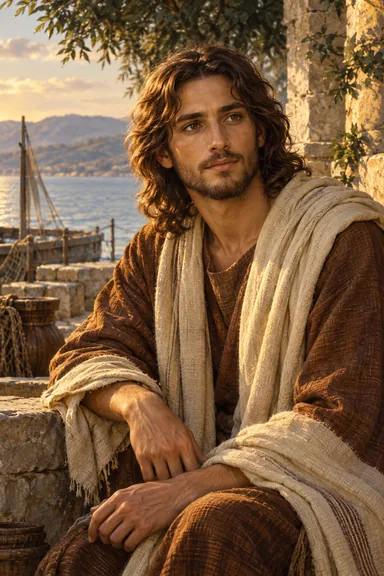
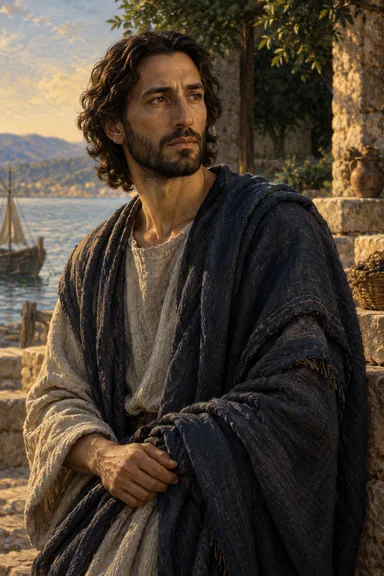
Artistic illustration · ImageGenArtistic interpretation; the historical likeness is unknown.
A JOURNEY THROUGH THE STORY
5 chapters. One journey.
Explore at your pace, or play the story to move between chapters every 12 seconds.
Artistic illustration · ImageGenArtistic imagination based on the account; not a reconstruction of events.
01 / 05Jesus’s ministry
Leaving Zebedee’s boat
Scripture
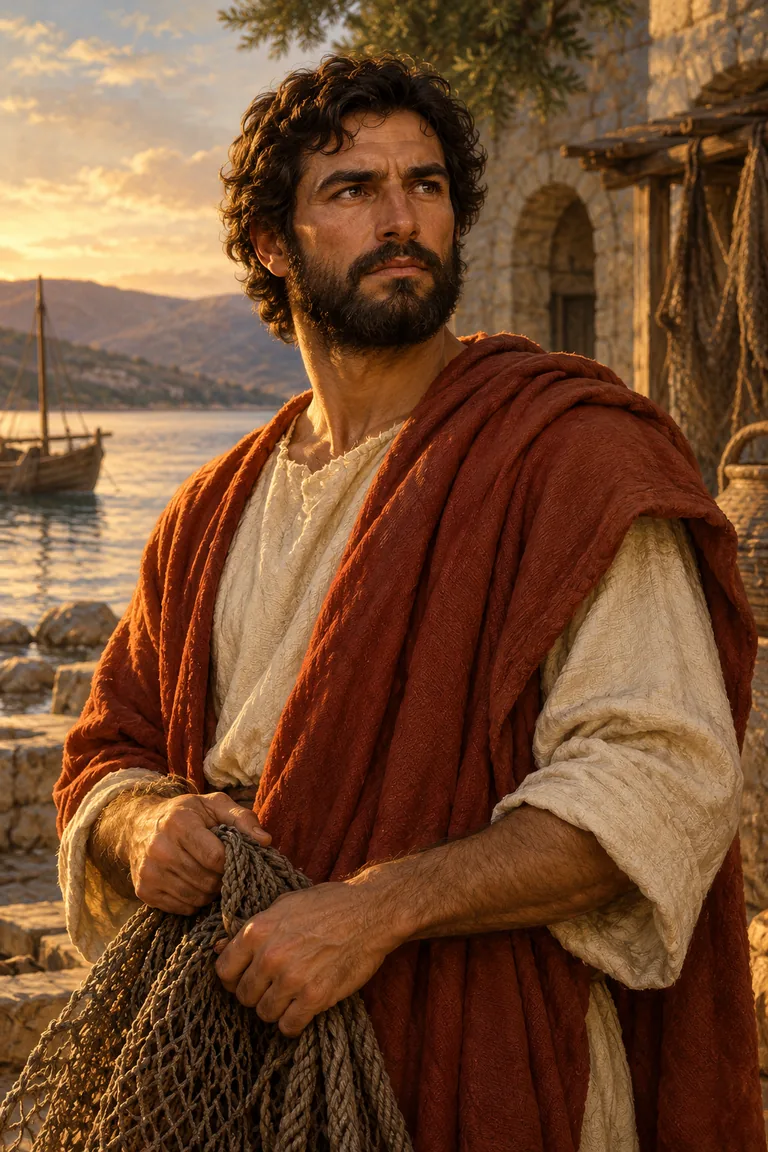
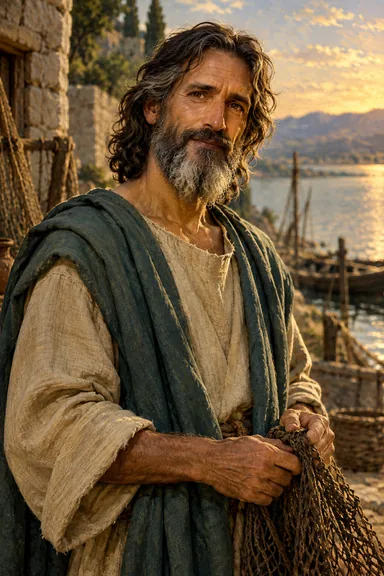
Mark 1:19–20 depicts James and John repairing nets. At Jesus’s call, they leave their father with the hired workers in the boat. Their calling begins within ordinary work and family life, before they become known as apostles.
Artistic illustration · ImageGenArtistic imagination based on the account; not a reconstruction of events.
02 / 05Jesus’s ministry
Witness to glory on the mountain
Scripture
Mark 9:2–8 places James beside Peter and John at the Transfiguration. They witness Jesus’s glory, but this is no promise of an easy road ahead. Their Teacher’s identity will also be disclosed through suffering.
Artistic illustration · ImageGenArtistic imagination based on the account; not a reconstruction of events.
03 / 05Passion
Gethsemane: learning to keep watch
Scripture
Mark 14:32–42 again names the three disciples in Gethsemane. Jesus asks them to keep watch, but they fall asleep. James, who saw glory, now stands near the Teacher’s anguish; closeness does not remove human weakness.
Artistic illustration · ImageGenArtistic imagination based on the account; not a reconstruction of events.
04 / 05Early Church
Among Jerusalem’s witnesses
Scripture
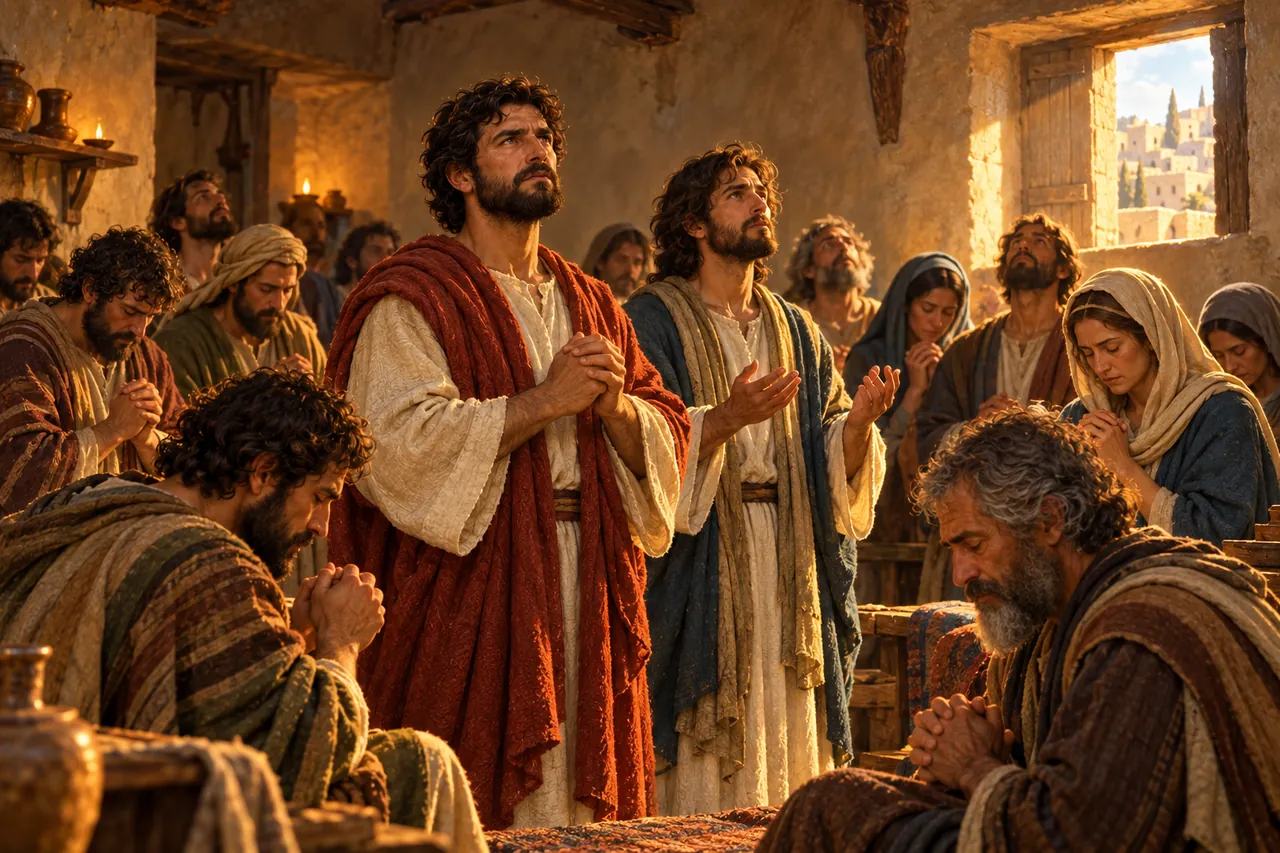
Acts 1:13 still names James with his brother and the other apostles in the post-Ascension community. Unlike Paul’s travels, James’s activities are not narrated in detail. The Spanish tradition developed later and must be read as a different type of source.
Artistic illustration · ImageGenArtistic imagination based on the account; not a reconstruction of events.
05 / 05Around AD 44
Herod’s sword and Compostela’s memory
Scripture
Acts 12:1–2 states that Herod killed James, John’s brother, with the sword. The USCCB notes place this around AD 44. Santiago Cathedral’s later tradition links his remains to Galicia; that transfer tradition is distinct from the biblical account of his death.
Jesus’s ministryArtistic illustration · ImageGenArtistic imagination based on the account; not a reconstruction of events.
Mark 1:19–20 depicts James and John repairing nets. At Jesus’s call, they leave their father with the hired workers in the boat. Their calling begins within ordinary work and family life, before they become known as apostles.
Jesus’s ministryArtistic illustration · ImageGenArtistic imagination based on the account; not a reconstruction of events.
Mark 9:2–8 places James beside Peter and John at the Transfiguration. They witness Jesus’s glory, but this is no promise of an easy road ahead. Their Teacher’s identity will also be disclosed through suffering.
PassionArtistic illustration · ImageGenArtistic imagination based on the account; not a reconstruction of events.
Mark 14:32–42 again names the three disciples in Gethsemane. Jesus asks them to keep watch, but they fall asleep. James, who saw glory, now stands near the Teacher’s anguish; closeness does not remove human weakness.
Early ChurchArtistic illustration · ImageGenArtistic imagination based on the account; not a reconstruction of events.
Acts 1:13 still names James with his brother and the other apostles in the post-Ascension community. Unlike Paul’s travels, James’s activities are not narrated in detail. The Spanish tradition developed later and must be read as a different type of source.
Around AD 44Artistic illustration · ImageGenArtistic imagination based on the account; not a reconstruction of events.
Acts 12:1–2 states that Herod killed James, John’s brother, with the sword. The USCCB notes place this around AD 44. Santiago Cathedral’s later tradition links his remains to Galicia; that transfer tradition is distinct from the biblical account of his death.
James the Greater is distinct from James son of Alphaeus. Acts 12 records his death; his journey to Spain and the transfer of his body to Galicia belong to later tradition.
PRESENT-DAY LOCATIONS
Relics and places of remembrance
These attributions follow site custodians, not biological testing of identity. The locations are a selection, not an inventory of all fragments.
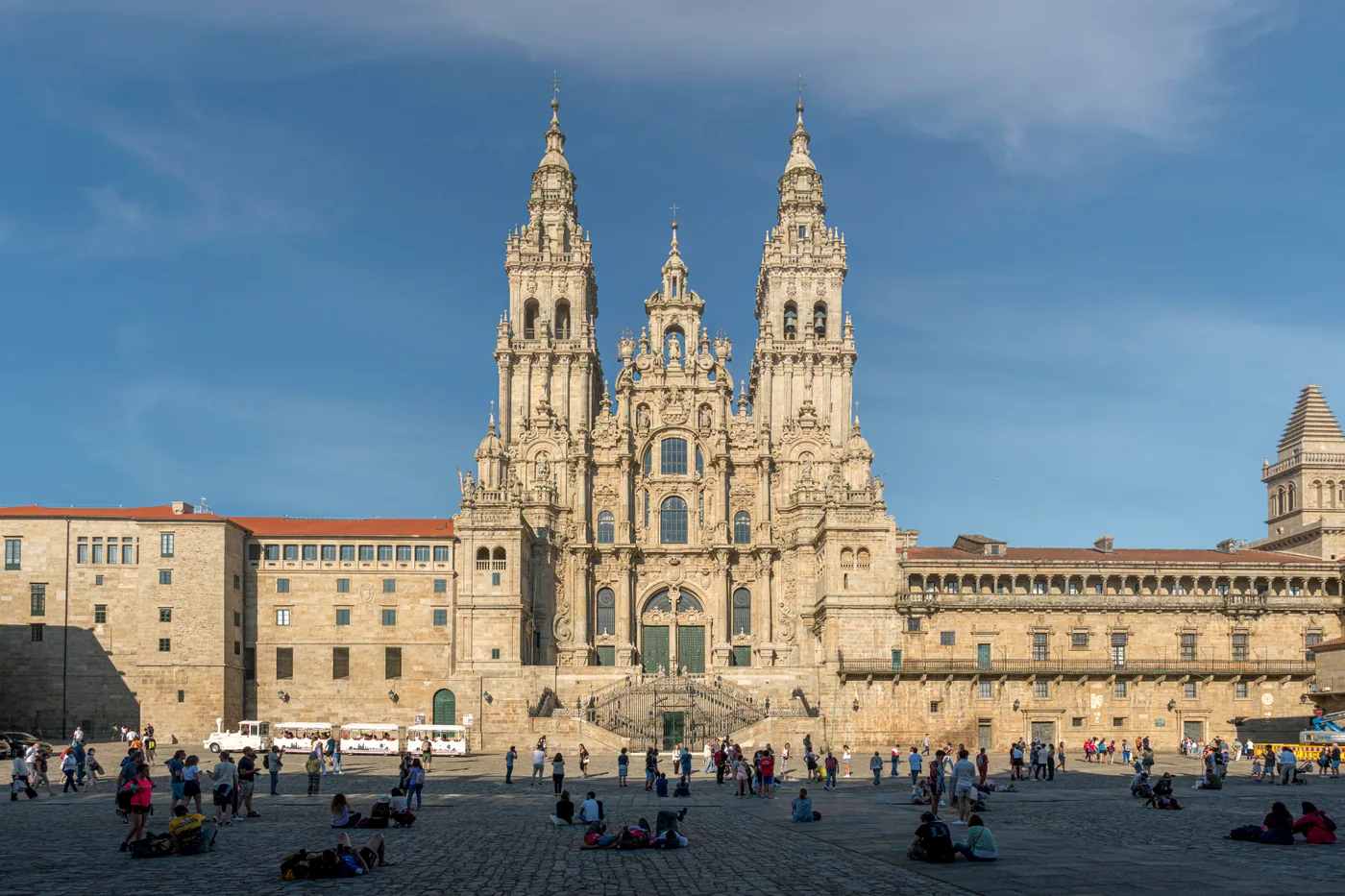
A panorama of the west side of Santiago de Compostela Cathedral. The apostolic crypt is inside the cathedral, not in the façade shown here.
Fernando Pascullo · CC BY-SA 4.0 · Photo source · 9 July 2021 · Resized and converted to WebP.Santiago de Compostela · Spain
Catedral de Santiago · Cripta Apostólica
Location reported by institutional sources
The crypt below the high altar houses remains venerated as those of James the Greater and his disciples. The tradition of moving his body to Galicia is distinct from the biblical account of his death in Judea. The cathedral is a real pilgrimage site; the relic attribution is presented as the cathedral’s tradition.