Artistic illustration · ImageGenArtistic interpretation; the historical likeness is unknown.
A JOURNEY THROUGH THE STORY
5 chapters. One journey.
Explore at your pace, or play the story to move between chapters every 12 seconds.
Artistic illustration · ImageGenArtistic imagination based on the account; not a reconstruction of events.
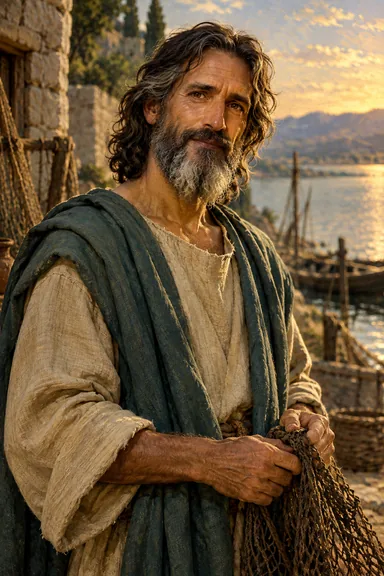
01 / 05Jesus’s ministry
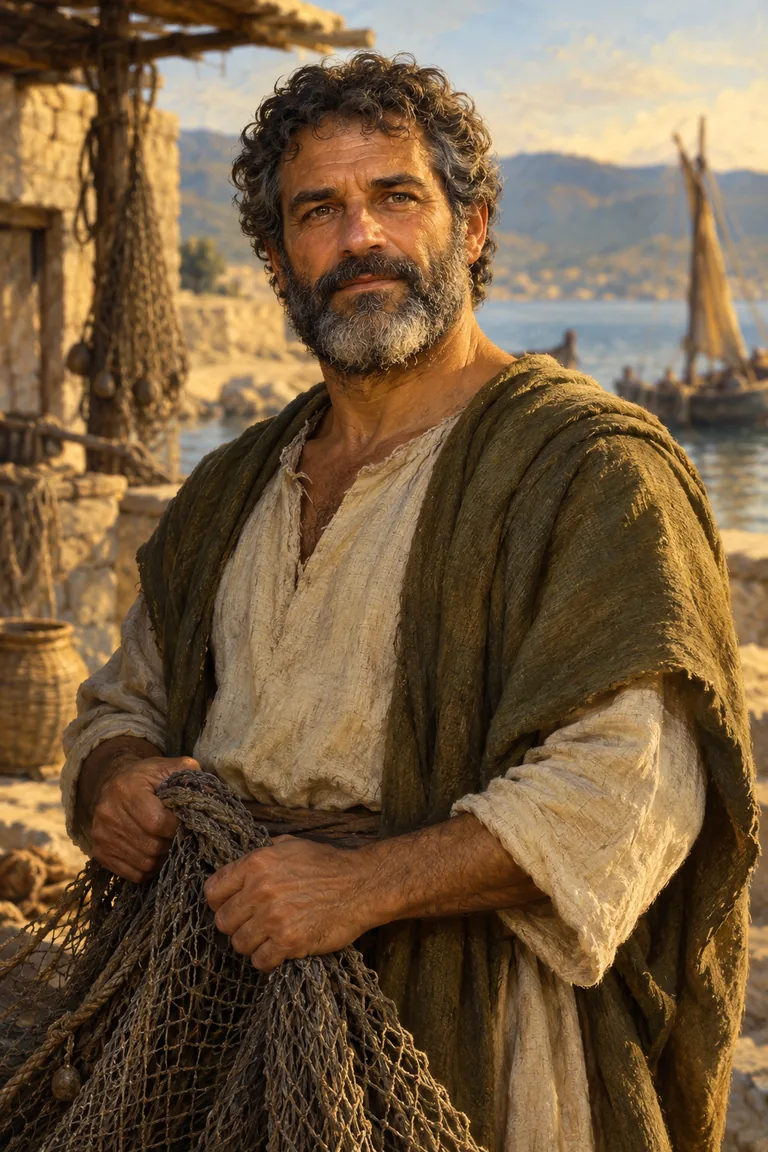
From nets to a calling
Scripture
Mark 1:16–20 describes Simon and Andrew leaving fishing to follow Jesus. John 1:40–42 tells of Andrew bringing Simon to Jesus, who names him Cephas. These accounts offer different perspectives on their beginnings, rather than a complete day-by-day schedule.
Artistic illustration · ImageGenArtistic imagination based on the account; not a reconstruction of events.
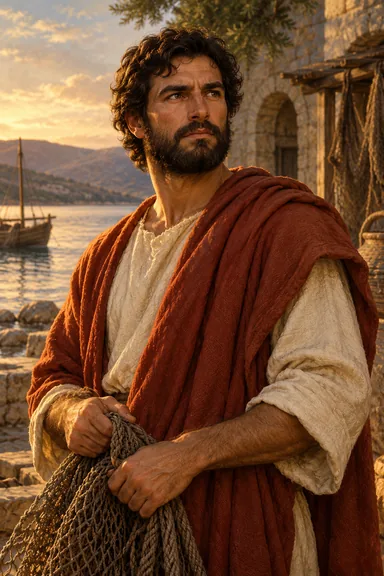
02 / 05Jesus’s ministry
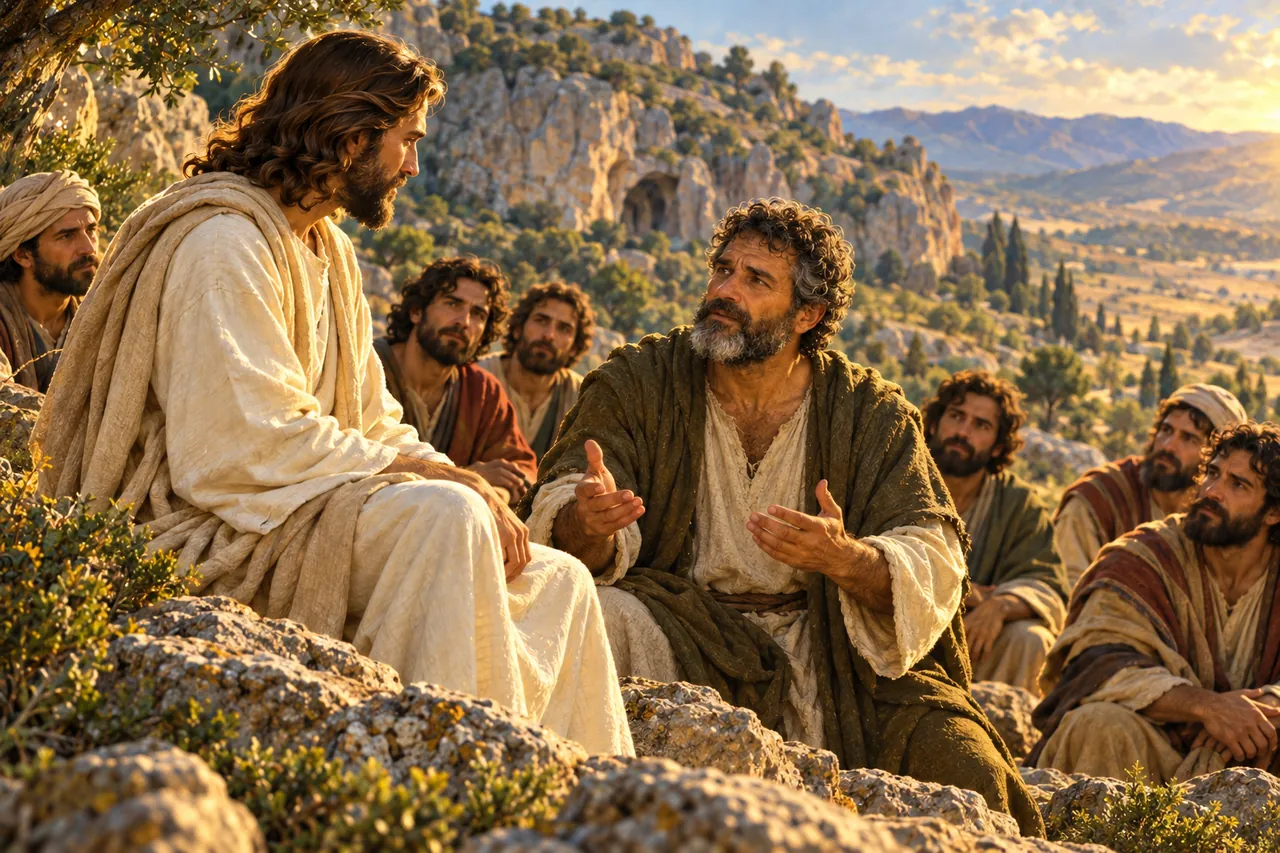
Confessing the Messiah, learning the cross
Scripture
In Matthew 16:13–23, Peter recognises Jesus as Messiah, yet resists the prospect of a suffering Messiah. Jesus’s correction shows that professing faith does not mean understanding the Teacher’s whole path. Peter still has to learn to follow rather than set the course.
Artistic illustration · ImageGenArtistic imagination based on the account; not a reconstruction of events.
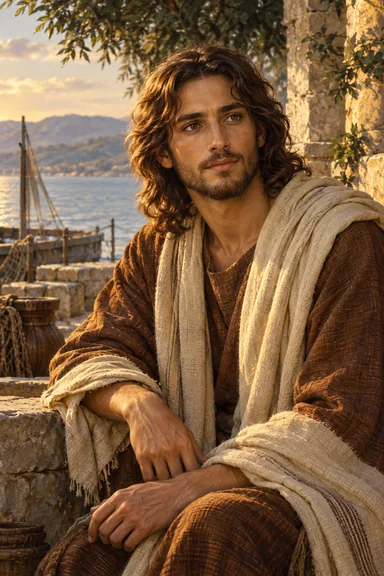
03 / 05Passion and Easter
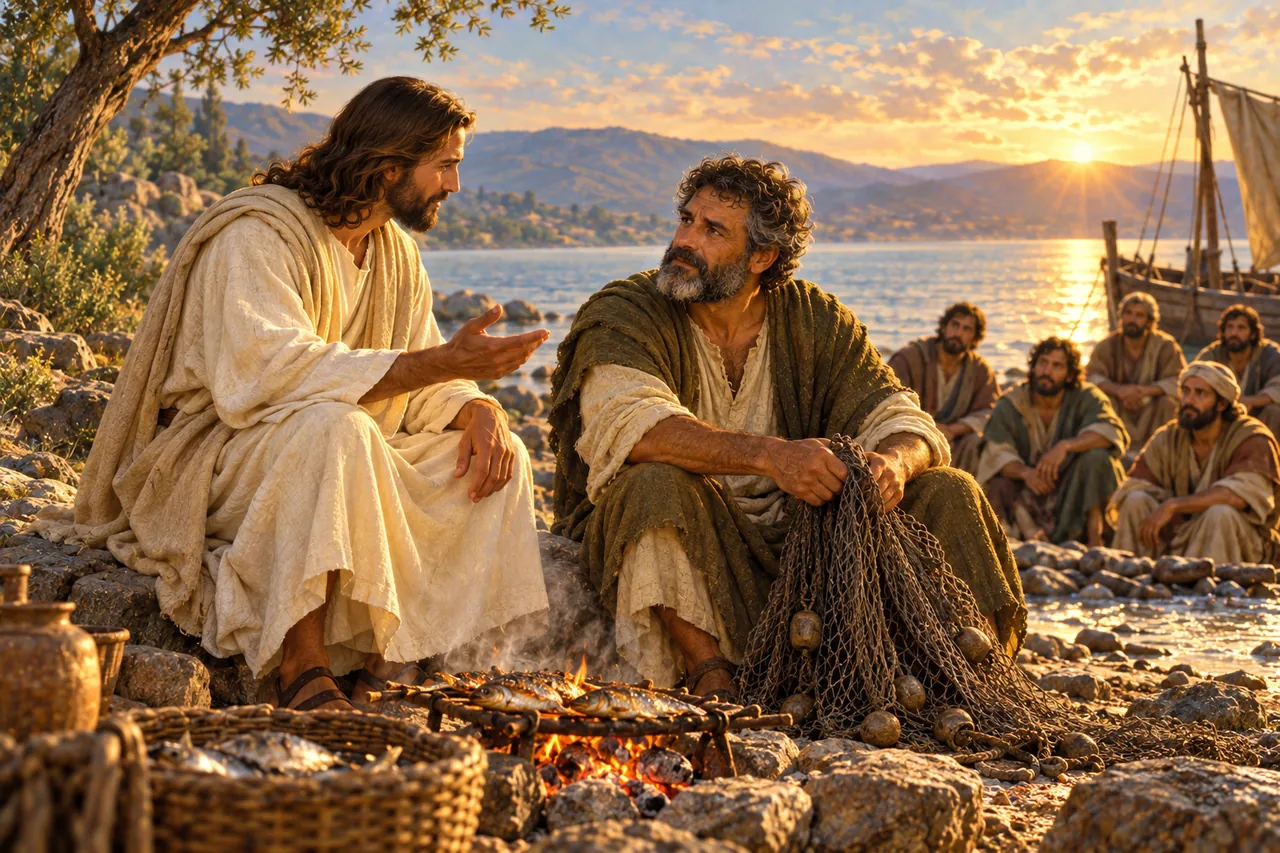
Denial and restoration
Scripture
Matthew 26:69–75 records Peter’s three denials and tears. John 21:15–19 depicts the risen Jesus questioning his love and renewing his responsibility. In these narratives, failure is real, yet it does not have the final word over his calling.
Artistic illustration · ImageGenArtistic imagination based on the account; not a reconstruction of events.
04 / 05Early Church
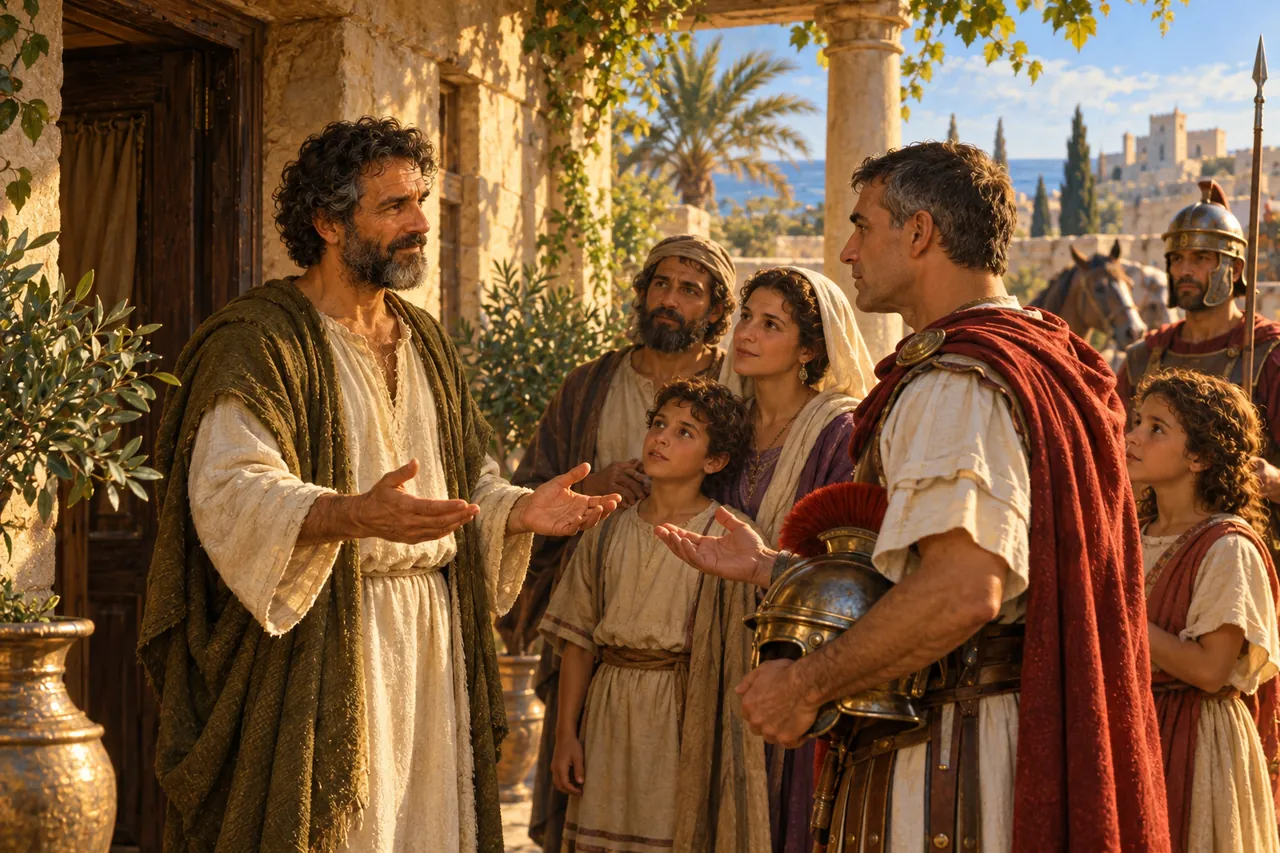
Witness in Jerusalem and Cornelius’s household
Scripture
Acts 2 presents Peter speaking at Pentecost. In chapter 10, his encounter with Cornelius opens the question of welcoming Gentiles. These give concrete traces of his early ministry; the book does not supply a complete account of his later journey to Rome.
Artistic illustration · ImageGenSymbolic illustration for tradition or uncertain details.
05 / 05End of life · Nero’s reign
Final witness in Rome
Tradition
Early Christian tradition locates Peter’s martyrdom in Rome. Eusebius cites Origen about crucifixion head downwards; Saint Peter’s custodian associates his burial with Vatican Hill and Nero’s reign. Traditional details should be distinguished from contemporary testimony or an exact date.
Jesus’s ministryArtistic illustration · ImageGenArtistic imagination based on the account; not a reconstruction of events.
Mark 1:16–20 describes Simon and Andrew leaving fishing to follow Jesus. John 1:40–42 tells of Andrew bringing Simon to Jesus, who names him Cephas. These accounts offer different perspectives on their beginnings, rather than a complete day-by-day schedule.
Jesus’s ministryArtistic illustration · ImageGenArtistic imagination based on the account; not a reconstruction of events.
In Matthew 16:13–23, Peter recognises Jesus as Messiah, yet resists the prospect of a suffering Messiah. Jesus’s correction shows that professing faith does not mean understanding the Teacher’s whole path. Peter still has to learn to follow rather than set the course.
Passion and EasterArtistic illustration · ImageGenArtistic imagination based on the account; not a reconstruction of events.
Matthew 26:69–75 records Peter’s three denials and tears. John 21:15–19 depicts the risen Jesus questioning his love and renewing his responsibility. In these narratives, failure is real, yet it does not have the final word over his calling.
Early ChurchArtistic illustration · ImageGenArtistic imagination based on the account; not a reconstruction of events.
Acts 2 presents Peter speaking at Pentecost. In chapter 10, his encounter with Cornelius opens the question of welcoming Gentiles. These give concrete traces of his early ministry; the book does not supply a complete account of his later journey to Rome.
End of life · Nero’s reignArtistic illustration · ImageGenSymbolic illustration for tradition or uncertain details.
Early Christian tradition locates Peter’s martyrdom in Rome. Eusebius cites Origen about crucifixion head downwards; Saint Peter’s custodian associates his burial with Vatican Hill and Nero’s reign. Traditional details should be distinguished from contemporary testimony or an exact date.
Peter was originally called Simon. The inverted-cross tradition is recorded by Eusebius citing Origen, long after the event. Neither 64 nor 67 should be presented as an exact established year.
PRESENT-DAY LOCATIONS
Relics and places of remembrance
These attributions follow site custodians, not biological testing of identity. The locations are a selection, not an inventory of all fragments.
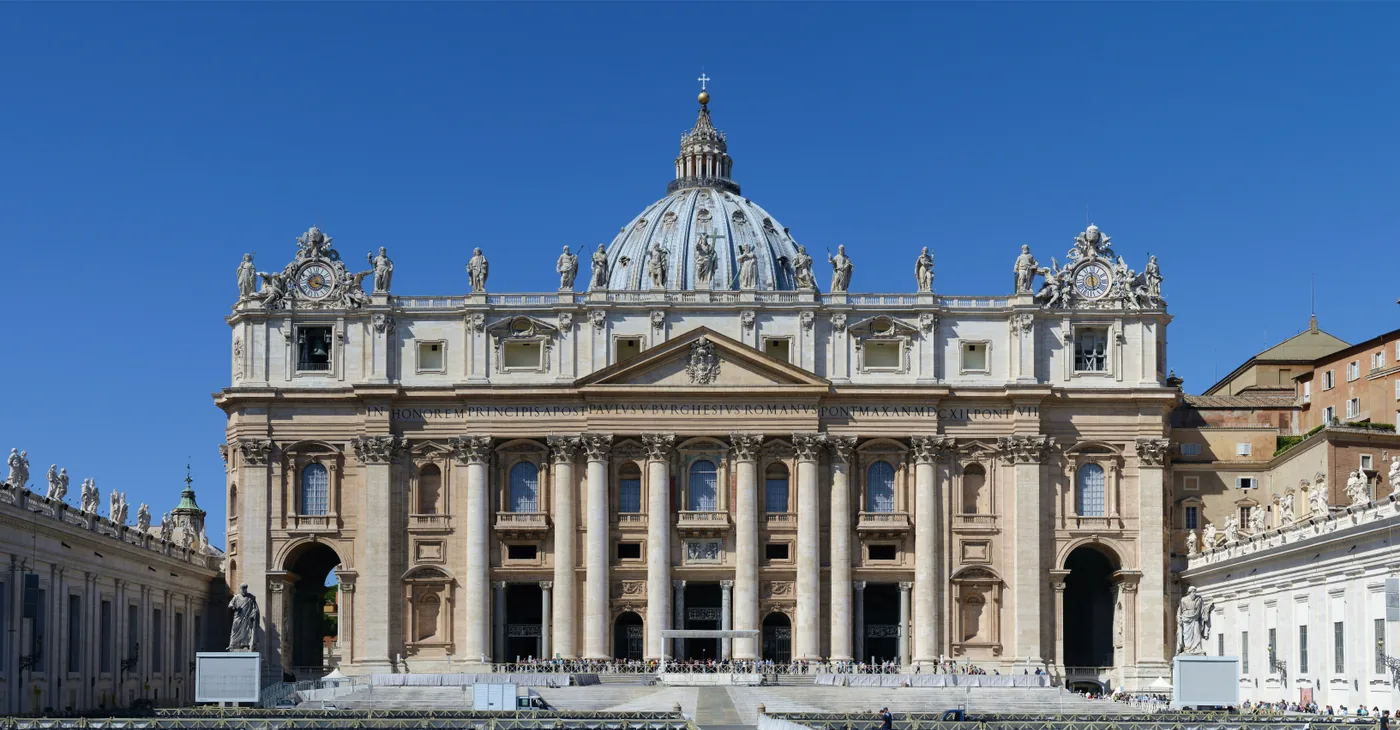
The façade of Saint Peter’s Basilica, Vatican City. This shows the exterior, not the underground burial spaces.
Alvesgaspar · CC BY-SA 4.0 · Photo source · 19 September 2015 · Resized and converted to WebP.Vatican City · Vatican City
Basilica di San Pietro · Necropolis
Location reported by institutional sources
The burial site associated with Peter lies beneath the main altar of Saint Peter’s Basilica. The custodian describes an ancient funerary monument and veneration predating Constantine. Identifying a burial site and attributing bones are separate questions; this page does not claim biological proof of Peter’s identity.