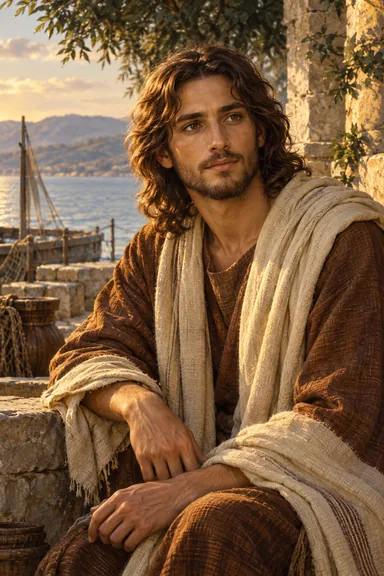
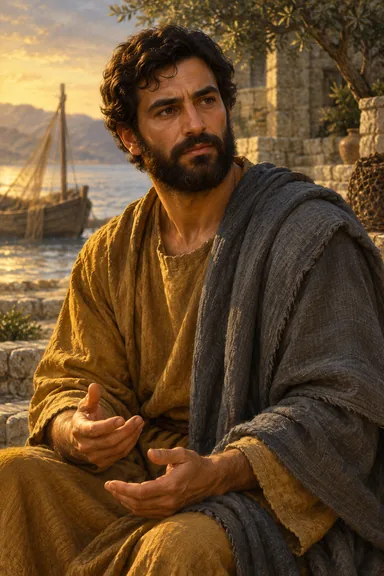
Artistic illustration · ImageGenArtistic interpretation; the historical likeness is unknown.
A JOURNEY THROUGH THE STORY
5 chapters. One journey.
Explore at your pace, or play the story to move between chapters every 12 seconds.
Artistic illustration · ImageGenArtistic imagination based on the account; not a reconstruction of events.
01 / 05Jesus’s ministry
From Bethsaida: following and inviting
Scripture
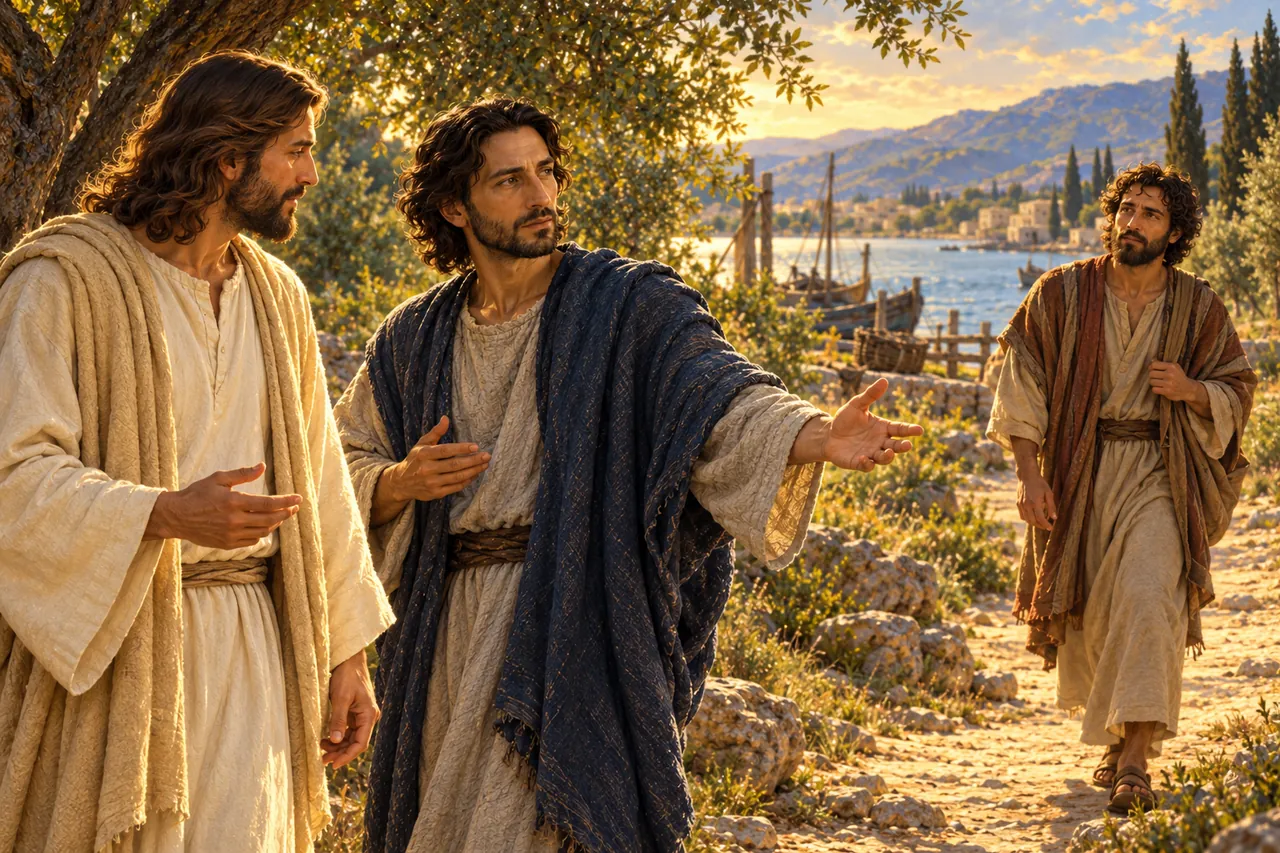
John 1:43–46 describes Jesus calling Philip, a native of Bethsaida. Philip finds Nathanael and invites him to see for himself. The invitation makes room for an encounter rather than merely accepting someone else’s opinion about the Teacher.
Artistic illustration · ImageGenArtistic imagination based on the account; not a reconstruction of events.
02 / 05Jesus’s ministry
Counting the crowd’s needs
Scripture
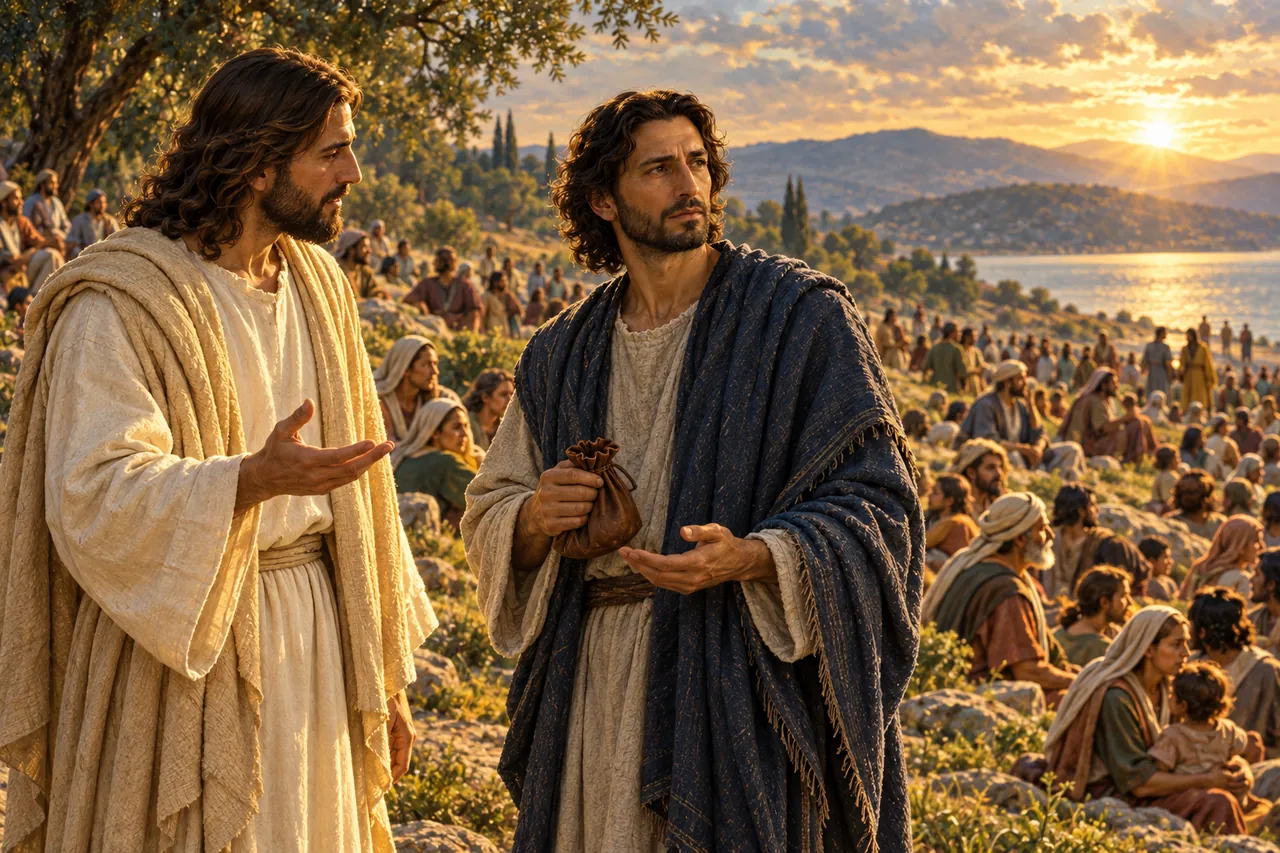
John 6:5–7 presents Jesus asking Philip about buying food for the crowd. Philip calculates the cost. His response highlights the limits of ordinary calculation before the feeding narrative unfolds.
Artistic illustration · ImageGenArtistic imagination based on the account; not a reconstruction of events.
03 / 05Last Supper
A question about the Father
Scripture
In John 14:8–11, Philip asks Jesus to show the Father. Jesus’s answer connects knowing him with knowing the Father. One disciple’s question becomes an occasion for teaching beyond Philip’s immediate concern.
Artistic illustration · ImageGenArtistic imagination based on the account; not a reconstruction of events.
04 / 05Early Church
Two Philips to distinguish
Scripture
Acts 1:13 names Philip among the apostles. The Philip preaching in Samaria and baptising the Ethiopian official in Acts 8 is identified in the USCCB notes as one of the Seven, not this apostle. The two figures’ itineraries should not simply be merged.
Artistic illustration · ImageGenSymbolic illustration for tradition or uncertain details.
05 / 05End of life · tradition
Hierapolis in tradition, Rome in custody
Tradition
Church tradition links Philip’s martyrdom with Hierapolis. The Roman basilica’s altarpiece depicts crucifixion; this detail is presented as artistic tradition. Santi XII Apostoli’s crypt reports some bones attributed to him alongside James the Lesser, without settling the apostle’s death year.
Jesus’s ministryArtistic illustration · ImageGenArtistic imagination based on the account; not a reconstruction of events.
John 1:43–46 describes Jesus calling Philip, a native of Bethsaida. Philip finds Nathanael and invites him to see for himself. The invitation makes room for an encounter rather than merely accepting someone else’s opinion about the Teacher.
Jesus’s ministryArtistic illustration · ImageGenArtistic imagination based on the account; not a reconstruction of events.
John 6:5–7 presents Jesus asking Philip about buying food for the crowd. Philip calculates the cost. His response highlights the limits of ordinary calculation before the feeding narrative unfolds.
Last SupperArtistic illustration · ImageGenArtistic imagination based on the account; not a reconstruction of events.
In John 14:8–11, Philip asks Jesus to show the Father. Jesus’s answer connects knowing him with knowing the Father. One disciple’s question becomes an occasion for teaching beyond Philip’s immediate concern.
Early ChurchArtistic illustration · ImageGenArtistic imagination based on the account; not a reconstruction of events.
Acts 1:13 names Philip among the apostles. The Philip preaching in Samaria and baptising the Ethiopian official in Acts 8 is identified in the USCCB notes as one of the Seven, not this apostle. The two figures’ itineraries should not simply be merged.
End of life · traditionArtistic illustration · ImageGenSymbolic illustration for tradition or uncertain details.
Church tradition links Philip’s martyrdom with Hierapolis. The Roman basilica’s altarpiece depicts crucifixion; this detail is presented as artistic tradition. Santi XII Apostoli’s crypt reports some bones attributed to him alongside James the Lesser, without settling the apostle’s death year.
Philip the apostle must be distinguished from Philip the evangelist in Acts 8. Hierapolis traditions sometimes conflate them. A church painting’s martyrdom scene represents iconographic tradition, not contemporary proof.
PRESENT-DAY LOCATIONS
Relics and places of remembrance
These attributions follow site custodians, not biological testing of identity. The locations are a selection, not an inventory of all fragments.
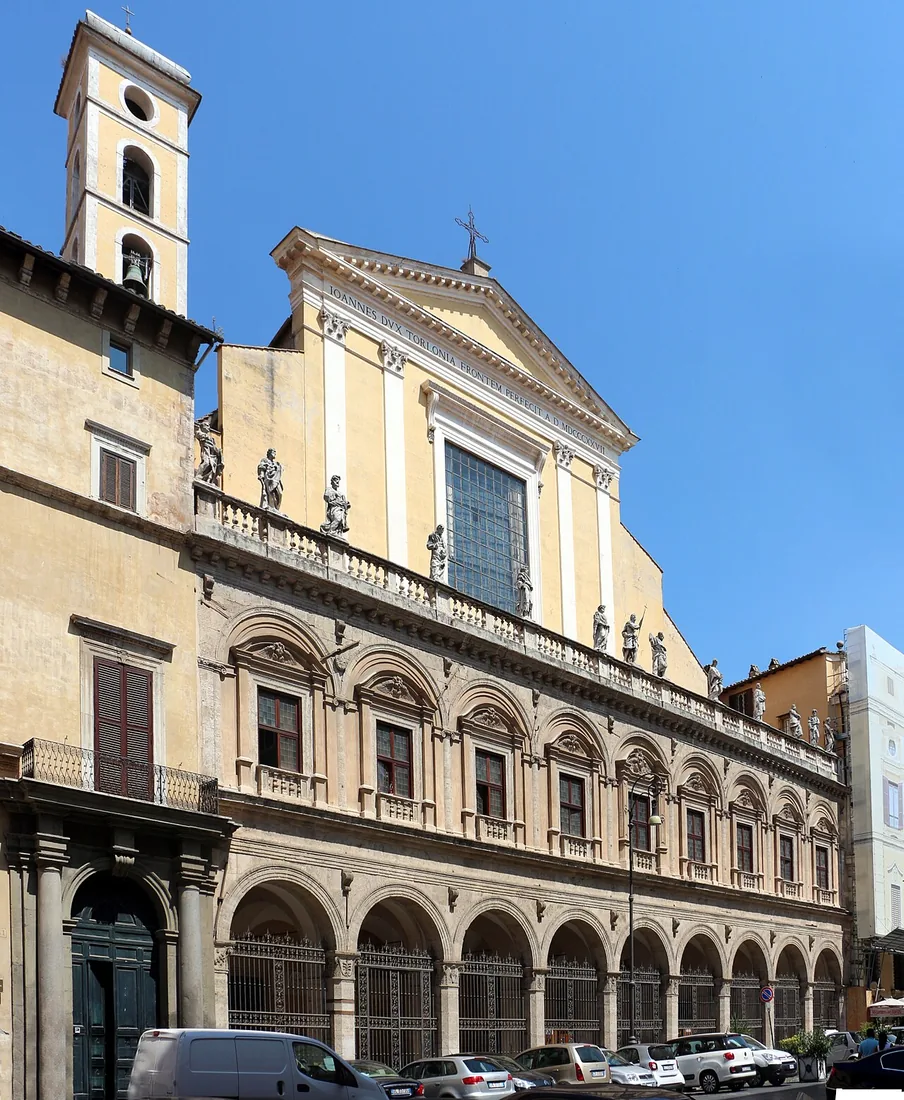
The façade of the Basilica of Santi XII Apostoli in Rome. Its crypt is the devotional location for relics attributed to Philip and James son of Alphaeus.
Sailko · CC BY 3.0 · Photo source · 17 July 2015 · Resized and converted to WebP.Rome · Italy
Basilica Santi XII Apostoli · Cripta
Location reported by institutional sources
The basilica reports that its crypt contains some bones attributed to Philip and James the Lesser. Its custodian describes excavations in 1873 and reinstallation on 1 May 1879. The basilica’s name does not mean that it holds the remains of all twelve apostles.