Artistic illustration · ImageGenArtistic interpretation; the historical likeness is unknown.
A JOURNEY THROUGH THE STORY
5 chapters. One journey.
Explore at your pace, or play the story to move between chapters every 12 seconds.
Artistic illustration · ImageGenArtistic imagination based on the account; not a reconstruction of events.
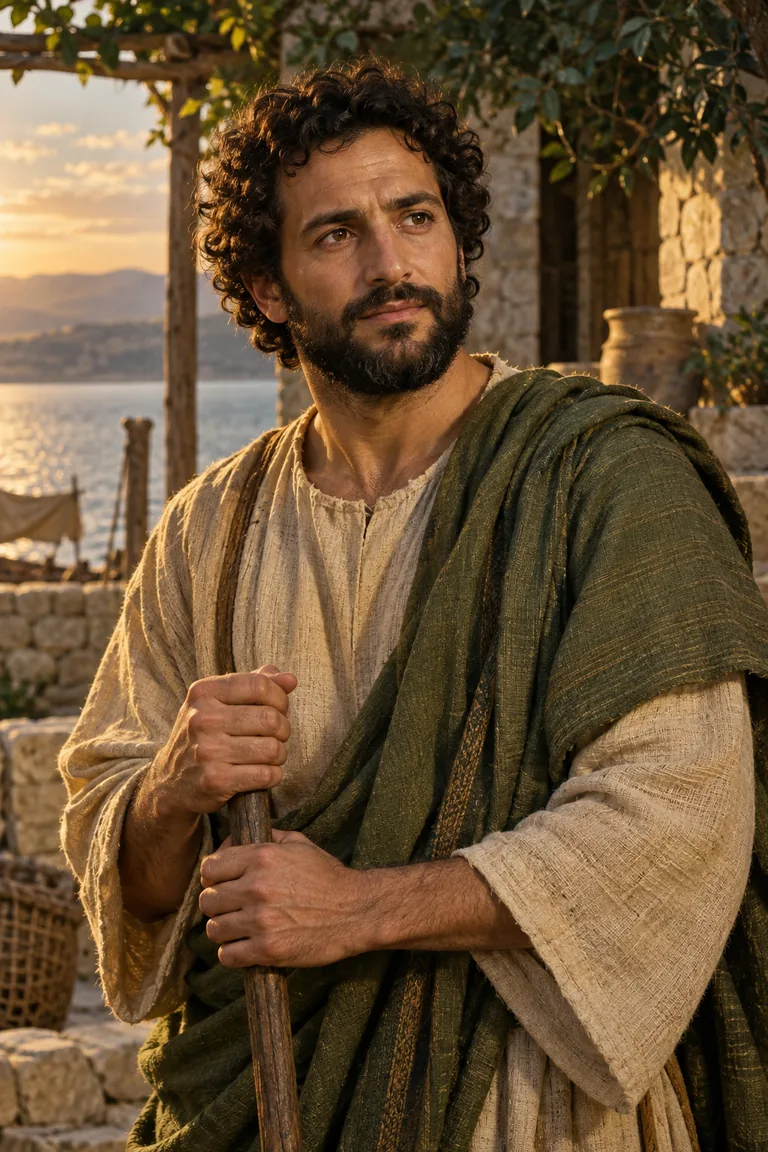
01 / 05Jesus’s ministry
A name among the Twelve
Scripture
Matthew 10:2–4 includes Bartholomew in the apostolic list. The synoptic Gospels do not provide an individual calling scene. Tradition connects this name with Nathanael, who appears beside Philip in John’s Gospel.
Artistic illustration · ImageGenArtistic imagination based on the account; not a reconstruction of events.
02 / 05Jesus’s ministry
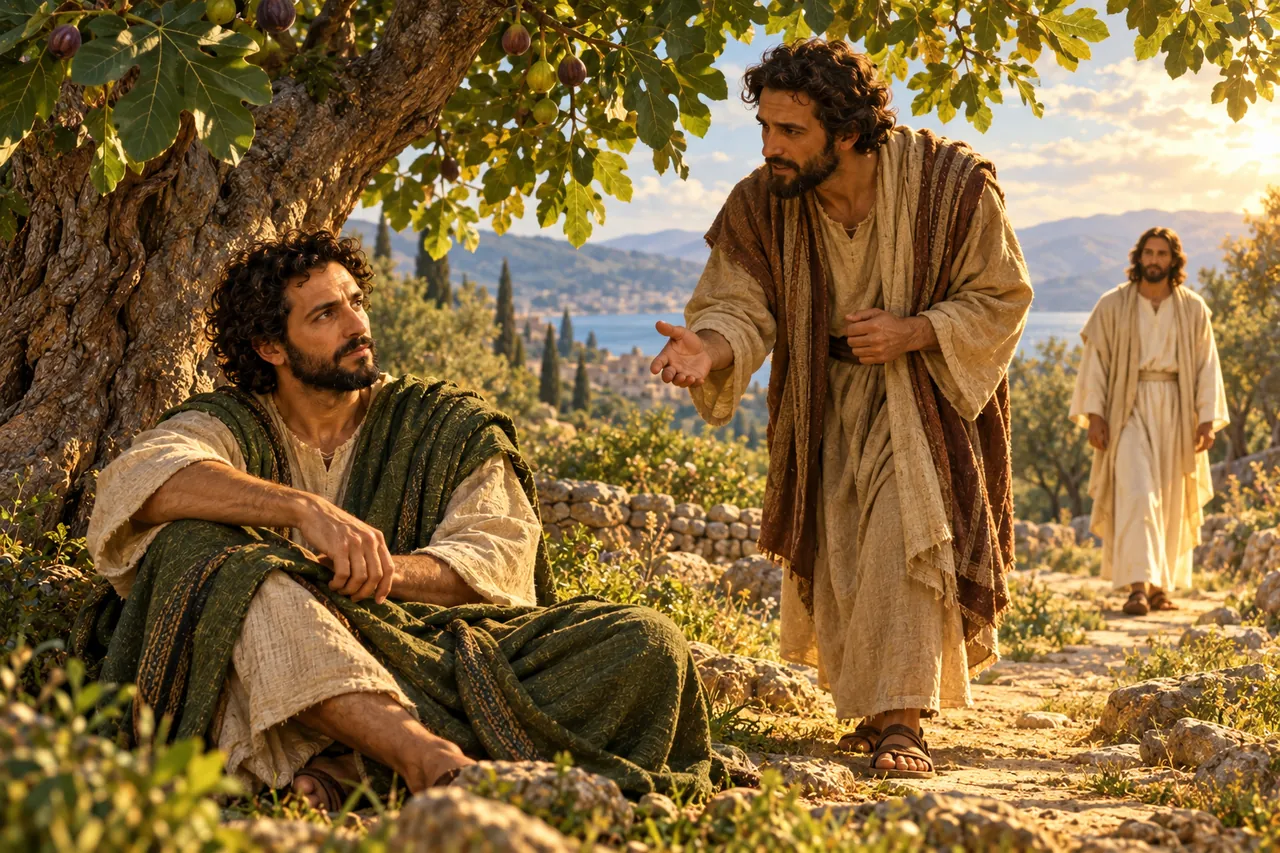
Nathanael and the fig tree
Scripture
John 1:45–51 tells of Philip inviting Nathanael to meet Jesus. His doubt about Nazareth turns into a confession after Jesus says he saw him beneath the fig tree. The account describes Nathanael; its connection with Bartholomew remains a traditional identification.
Artistic illustration · ImageGenArtistic imagination based on the account; not a reconstruction of events.
03 / 05After Easter
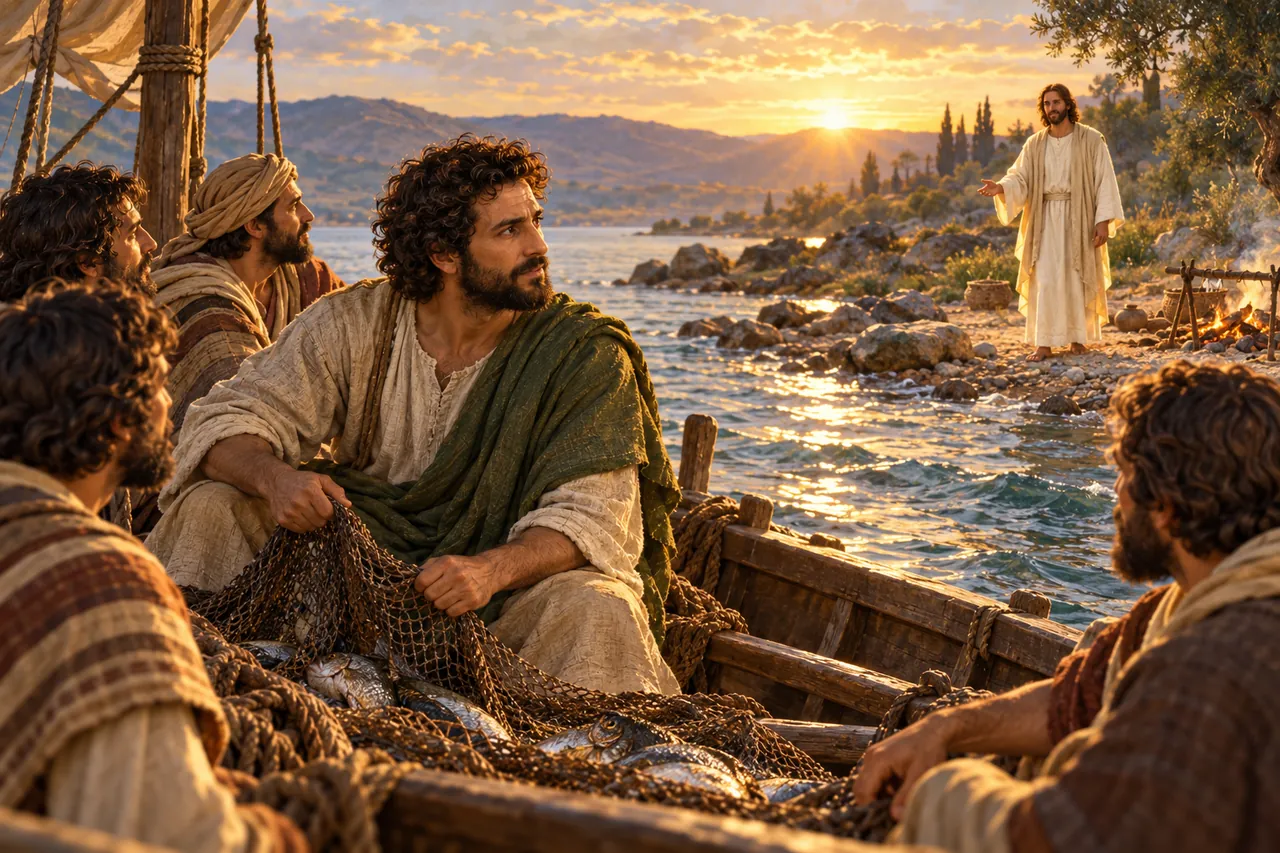
A witness by the lake
Scripture
John 21:2 names Nathanael of Cana among disciples near the Sea of Tiberias. Under the traditional identification, this contributes to Bartholomew’s portrait. The text itself still uses Nathanael; readers should know that interpretive step is being made.
Artistic illustration · ImageGenSymbolic illustration for tradition or uncertain details.
04 / 05Early Church and tradition
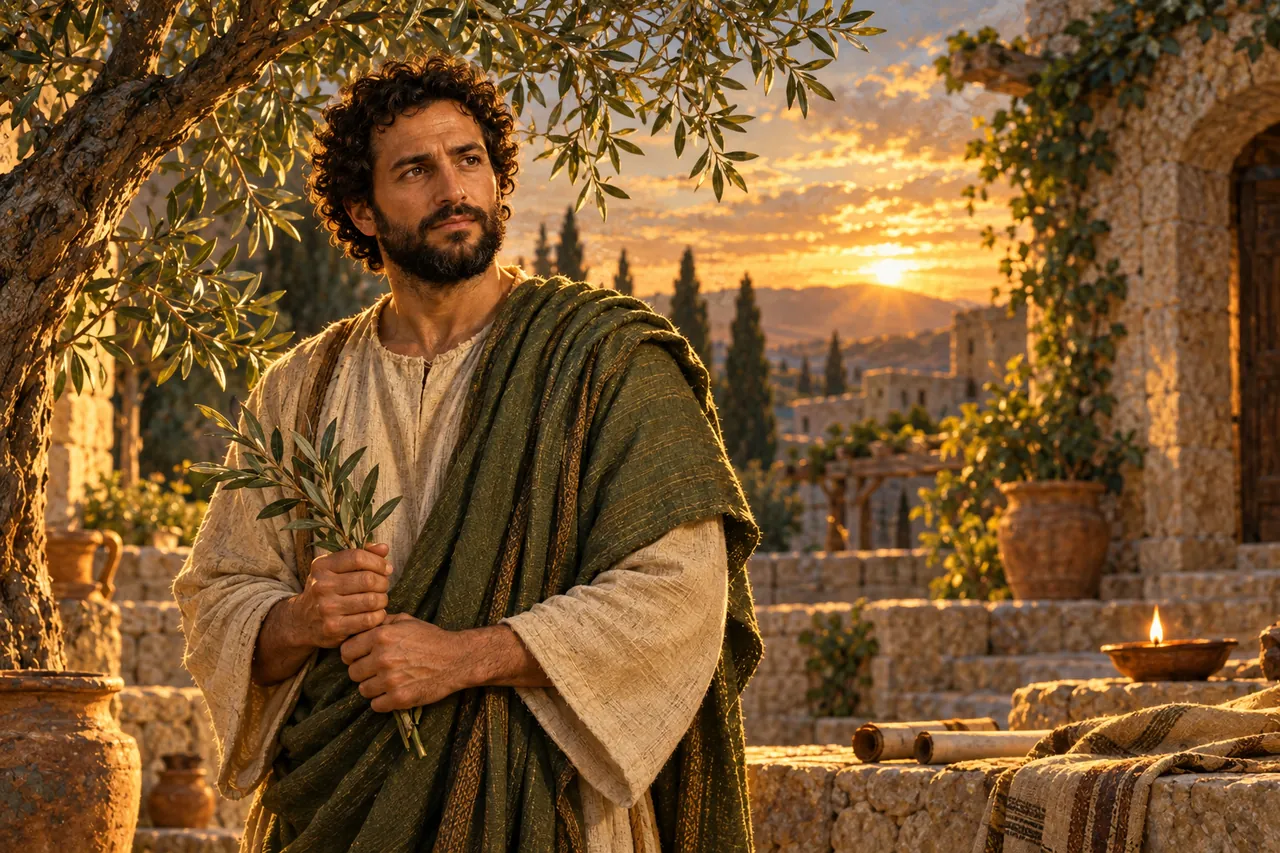
A mission with many unknowns
Uncertain
Acts 1:13 names Bartholomew within the apostolic community. Later sources associate him with distant missions, but provide no single secure route. Benedict XVI’s catechesis explicitly acknowledges the lack of precise information about his apostolic activity.
Artistic illustration · ImageGenSymbolic illustration for tradition or uncertain details.
05 / 05End of life · details uncertain
Martyrdom and memory in art
Tradition
The flaying account became popular in later tradition and medieval art. It is not a New Testament episode. The basilica on Tiber Island venerates remains attributed to him; a place of veneration does not establish the precise manner or year of his death.
Jesus’s ministryArtistic illustration · ImageGenArtistic imagination based on the account; not a reconstruction of events.
Matthew 10:2–4 includes Bartholomew in the apostolic list. The synoptic Gospels do not provide an individual calling scene. Tradition connects this name with Nathanael, who appears beside Philip in John’s Gospel.
Jesus’s ministryArtistic illustration · ImageGenArtistic imagination based on the account; not a reconstruction of events.
John 1:45–51 tells of Philip inviting Nathanael to meet Jesus. His doubt about Nazareth turns into a confession after Jesus says he saw him beneath the fig tree. The account describes Nathanael; its connection with Bartholomew remains a traditional identification.
After EasterArtistic illustration · ImageGenArtistic imagination based on the account; not a reconstruction of events.
John 21:2 names Nathanael of Cana among disciples near the Sea of Tiberias. Under the traditional identification, this contributes to Bartholomew’s portrait. The text itself still uses Nathanael; readers should know that interpretive step is being made.
Early Church and traditionArtistic illustration · ImageGenSymbolic illustration for tradition or uncertain details.
Acts 1:13 names Bartholomew within the apostolic community. Later sources associate him with distant missions, but provide no single secure route. Benedict XVI’s catechesis explicitly acknowledges the lack of precise information about his apostolic activity.
End of life · details uncertainArtistic illustration · ImageGenSymbolic illustration for tradition or uncertain details.
The flaying account became popular in later tradition and medieval art. It is not a New Testament episode. The basilica on Tiber Island venerates remains attributed to him; a place of veneration does not establish the precise manner or year of his death.
The Bartholomew–Nathanael identification is traditional. The flaying account became popular in medieval tradition and art; it should not be treated as eyewitness reporting. Mission routes and the death year remain uncertain.
PRESENT-DAY LOCATIONS
Relics and places of remembrance
These attributions follow site custodians, not biological testing of identity. The locations are a selection, not an inventory of all fragments.
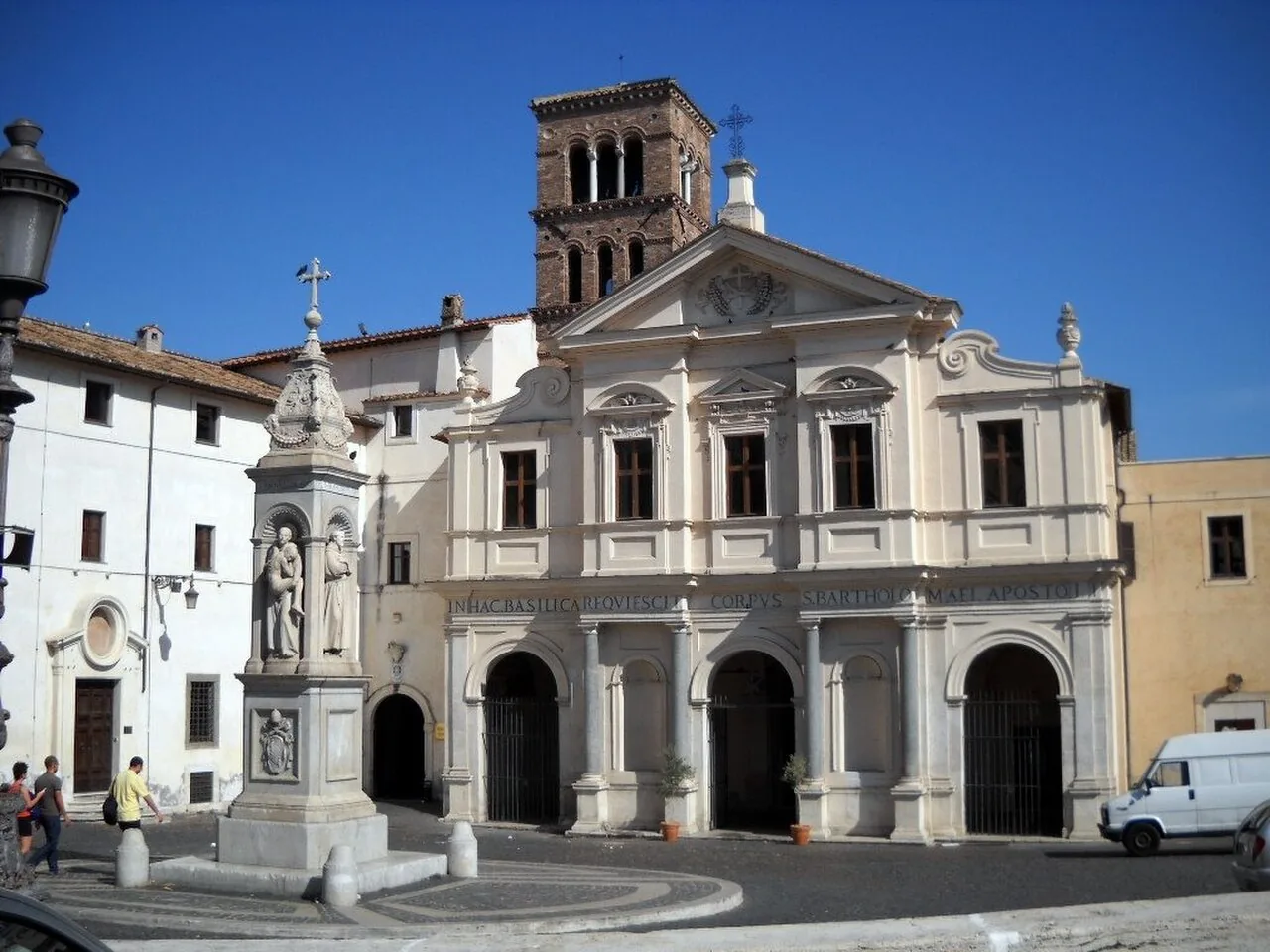
The church of San Bartolomeo all’Isola on Tiber Island, Rome. Its custodians identify it as a location for the veneration of Bartholomew’s relics.
The basilica on Tiber Island venerates relics attributed to Bartholomew. A tenth- to eleventh-century bronze basin is traditionally associated with transporting relics from Benevento. The historic vessel and the attribution of the remains should be read separately; this page does not claim to list every relic fragment.