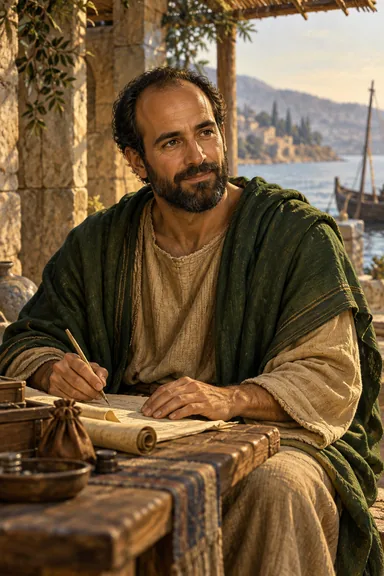
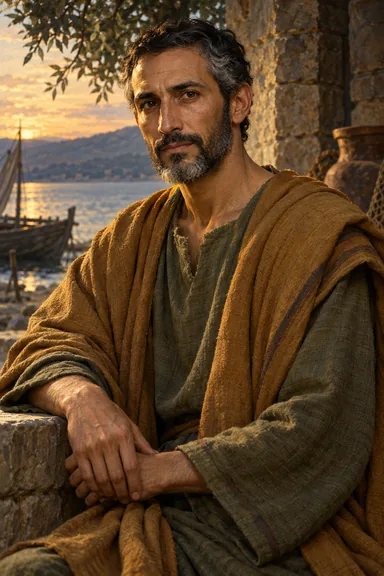
Artistic illustration · ImageGenArtistic interpretation; the historical likeness is unknown.
A JOURNEY THROUGH THE STORY
5 chapters. One journey.
Explore at your pace, or play the story to move between chapters every 12 seconds.
Artistic illustration · ImageGenArtistic imagination based on the account; not a reconstruction of events.
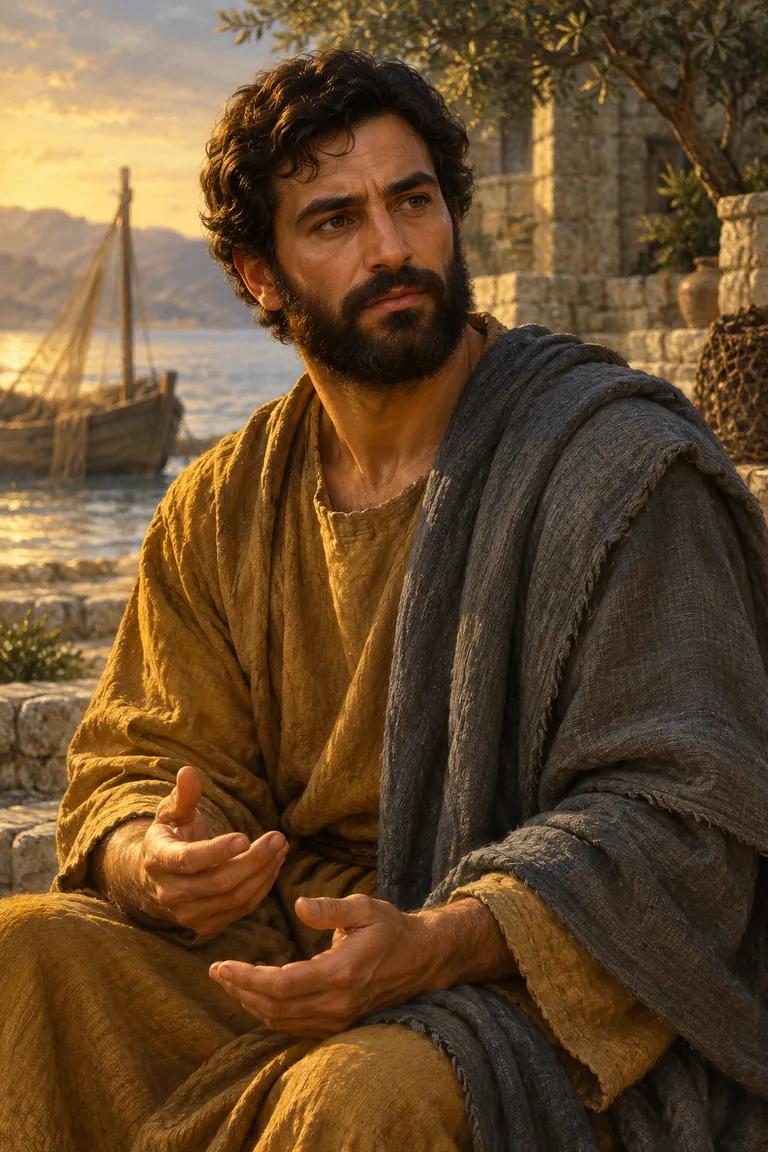
01 / 05Jesus’s ministry
The twin among the Twelve
Scripture
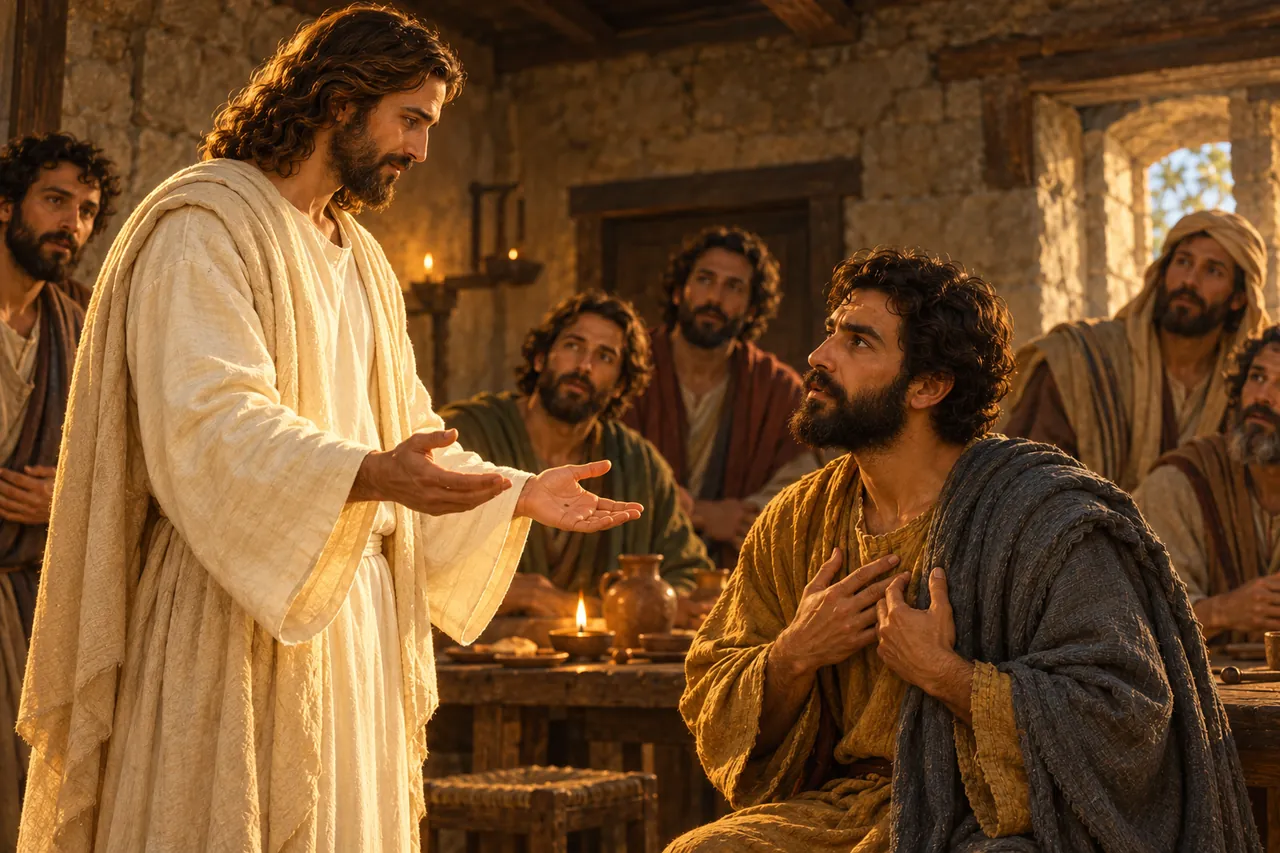
Thomas appears in Matthew 10’s apostolic list. John calls him Didymus, meaning twin, without identifying his twin or narrating his initial calling. His story becomes clearer through his conversations and responses to Jesus.
Artistic illustration · ImageGenArtistic imagination based on the account; not a reconstruction of events.
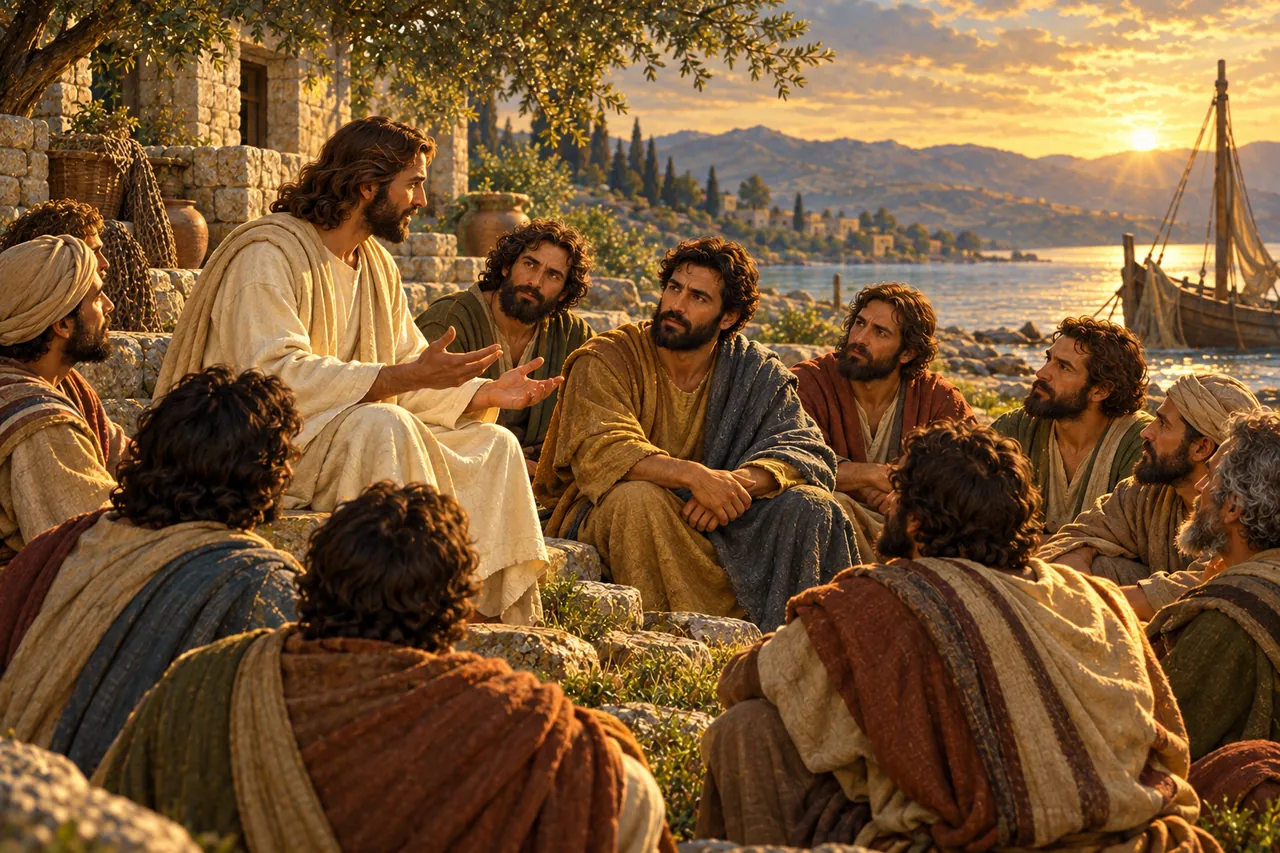
02 / 05Jesus’s ministry
Willing to face danger
Scripture
As Jesus approaches the Jerusalem area to see Lazarus, John 11:16 presents Thomas urging the others to go, even if they die with their Teacher. This scene offers a picture of courage alongside the popular description of Thomas as a doubter.
Artistic illustration · ImageGenArtistic imagination based on the account; not a reconstruction of events.
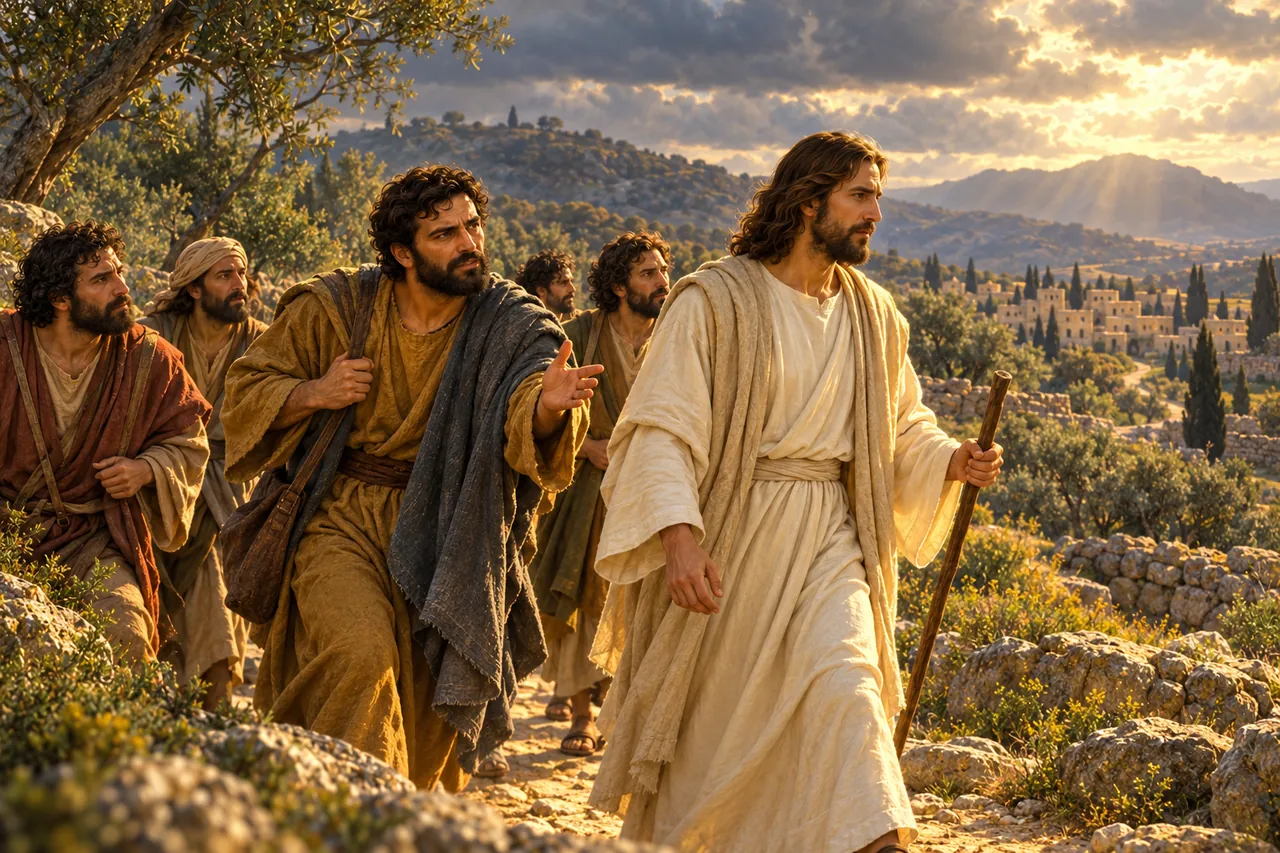
03 / 05Last Supper and Easter
Not knowing the way, then recognising the Lord
Scripture
Thomas asks about the way in John 14:5–6. After Easter, John 20:24–29 tells of his doubts about the disciples’ report and his encounter with Jesus. He then acknowledges his Lord and God; the text does not establish that he touched the wounds.
Artistic illustration · ImageGenSymbolic illustration for tradition or uncertain details.
04 / 05Post-Easter mission · tradition
The mission tradition in India
Tradition
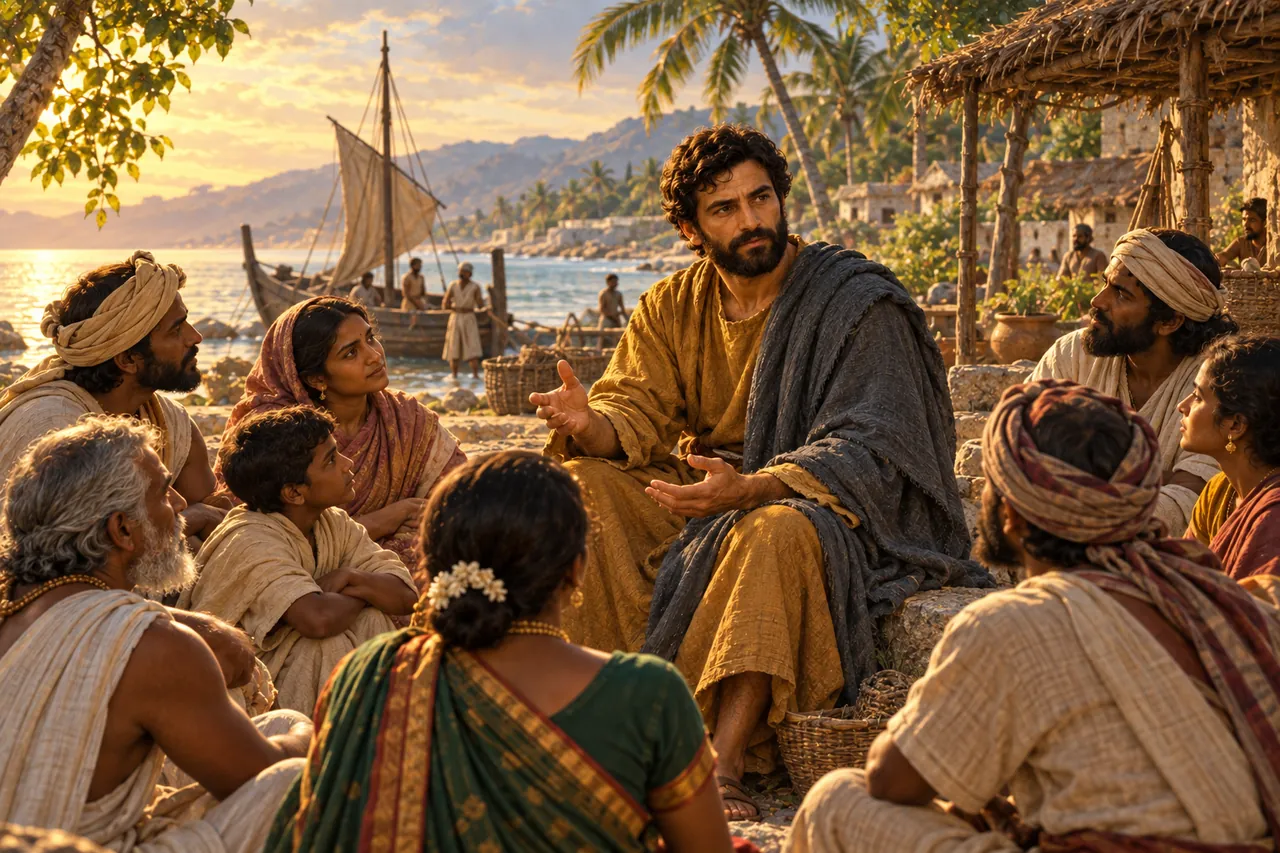
Thomas is named in the community in Acts 1:13. Later Christian tradition connects him with India, a connection summarised in Benedict XVI’s catechesis. This tradition matters deeply to Indian Christian identity, but its complete itinerary and chronology are not recorded in the New Testament.
Artistic illustration · ImageGenSymbolic illustration for tradition or uncertain details.
05 / 05End of life and later transfers
Mylapore, Chios and Ortona
Tradition
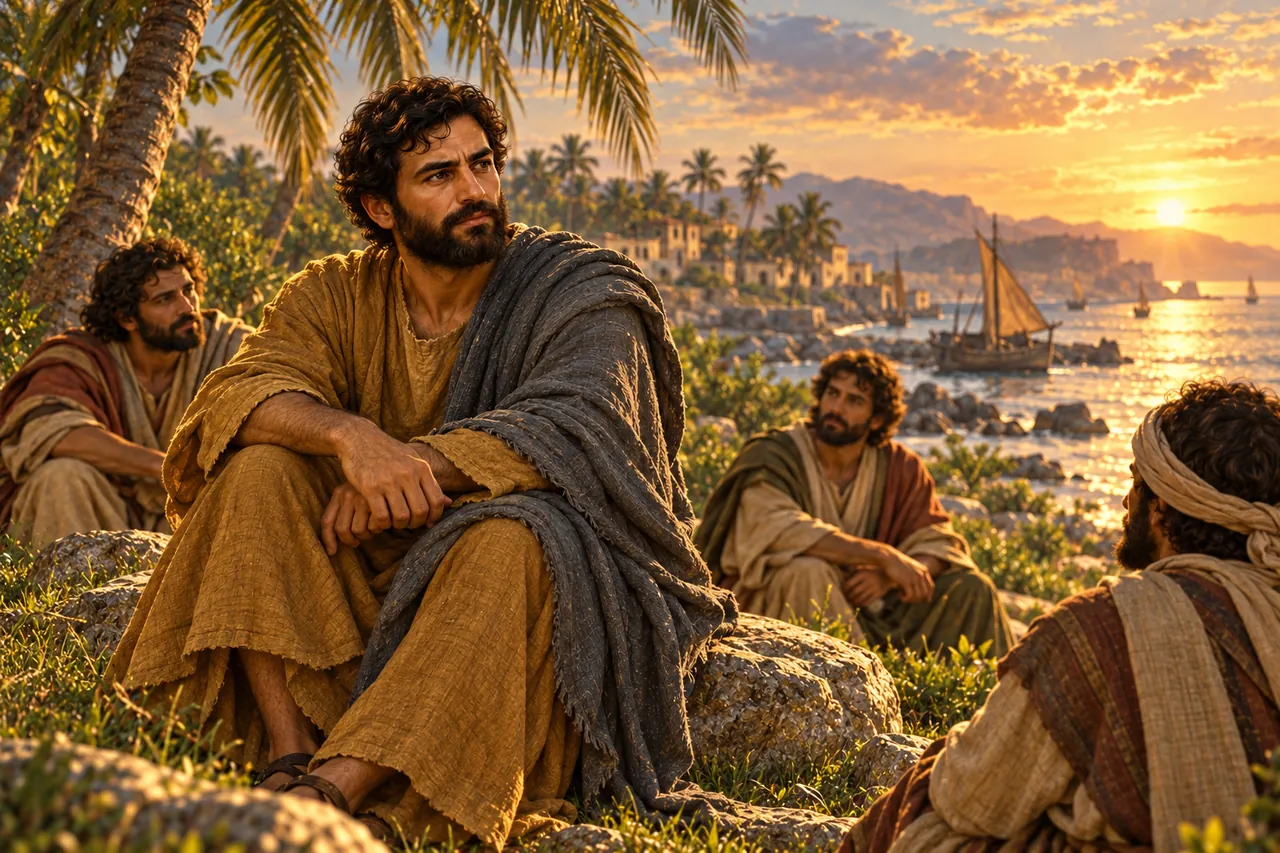
Tradition places Thomas’s martyrdom in India; Chennai’s Santhome links its basilica with his tomb. Ortona reports relics brought from Chios in 1258. These two sites reflect veneration and transfer history, not two separate deaths or evidence that the entire body is at both.
Jesus’s ministryArtistic illustration · ImageGenArtistic imagination based on the account; not a reconstruction of events.
Thomas appears in Matthew 10’s apostolic list. John calls him Didymus, meaning twin, without identifying his twin or narrating his initial calling. His story becomes clearer through his conversations and responses to Jesus.
Jesus’s ministryArtistic illustration · ImageGenArtistic imagination based on the account; not a reconstruction of events.
As Jesus approaches the Jerusalem area to see Lazarus, John 11:16 presents Thomas urging the others to go, even if they die with their Teacher. This scene offers a picture of courage alongside the popular description of Thomas as a doubter.
Last Supper and EasterArtistic illustration · ImageGenArtistic imagination based on the account; not a reconstruction of events.
Thomas asks about the way in John 14:5–6. After Easter, John 20:24–29 tells of his doubts about the disciples’ report and his encounter with Jesus. He then acknowledges his Lord and God; the text does not establish that he touched the wounds.
Post-Easter mission · traditionArtistic illustration · ImageGenSymbolic illustration for tradition or uncertain details.
Thomas is named in the community in Acts 1:13. Later Christian tradition connects him with India, a connection summarised in Benedict XVI’s catechesis. This tradition matters deeply to Indian Christian identity, but its complete itinerary and chronology are not recorded in the New Testament.
End of life and later transfersArtistic illustration · ImageGenSymbolic illustration for tradition or uncertain details.
Tradition places Thomas’s martyrdom in India; Chennai’s Santhome links its basilica with his tomb. Ortona reports relics brought from Chios in 1258. These two sites reflect veneration and transfer history, not two separate deaths or evidence that the entire body is at both.
John’s Gospel does not explicitly say Thomas ultimately touched Jesus’s wounds, although art often shows it. Indian martyrdom tradition and much later relic transfers differ from the biblical narrative.
PRESENT-DAY LOCATIONS
Relics and places of remembrance
These attributions follow site custodians, not biological testing of identity. The locations are a selection, not an inventory of all fragments.
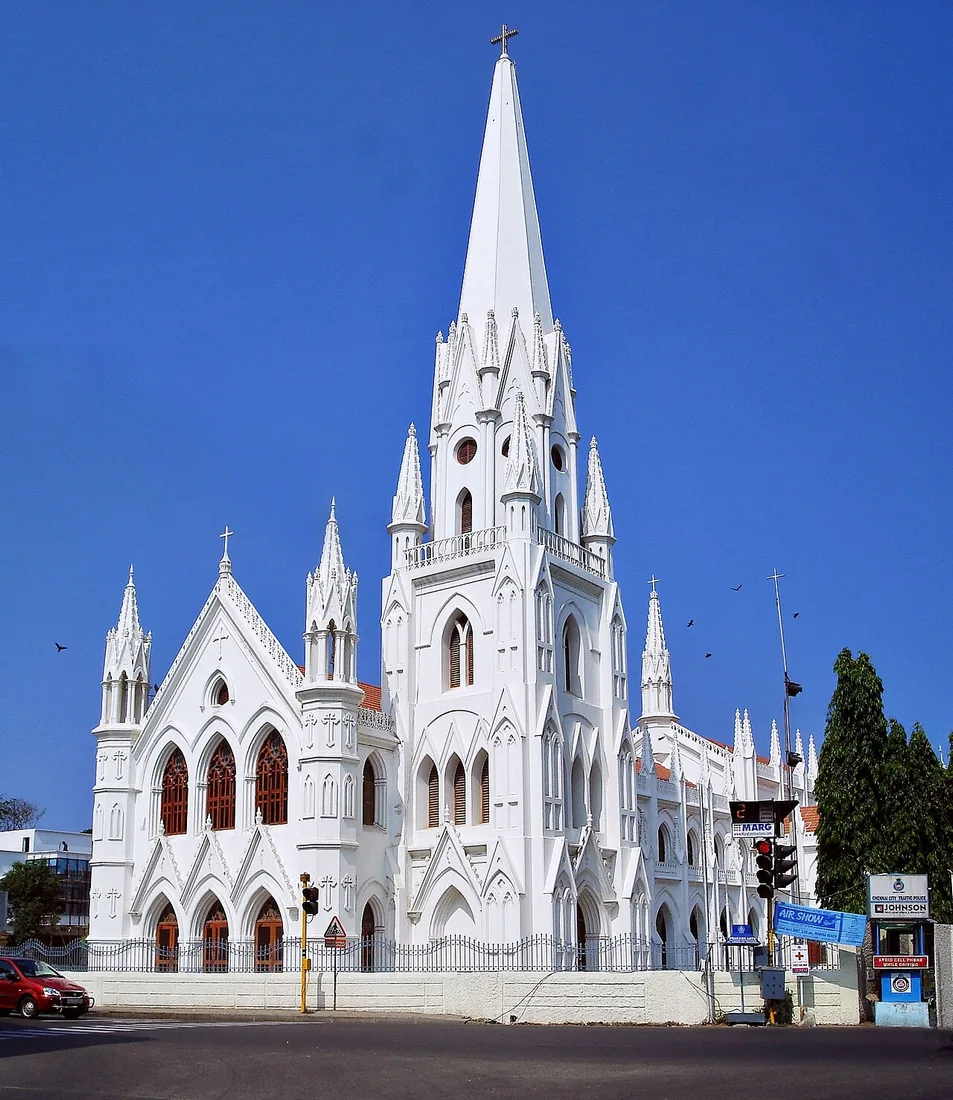
The façade of Santhome Cathedral Basilica, Chennai. The church stands at the location associated with Thomas’s burial tradition; this photograph shows its exterior.
Planemad · CC BY-SA 2.5 · Photo source · Uploaded 30 April 2007 · Resized and converted to WebP.Chennai · India
Santhome Cathedral Basilica
Location reported by institutional sources
Santhome describes itself as built above the Apostle Thomas’s tomb in Mylapore, Chennai. It is a major site of the Indian Thomas tradition. A traditional burial site does not mean that the entire body remains here; relics attributed to Thomas are also reported at Ortona. Confirm access and displayed objects with the custodian.
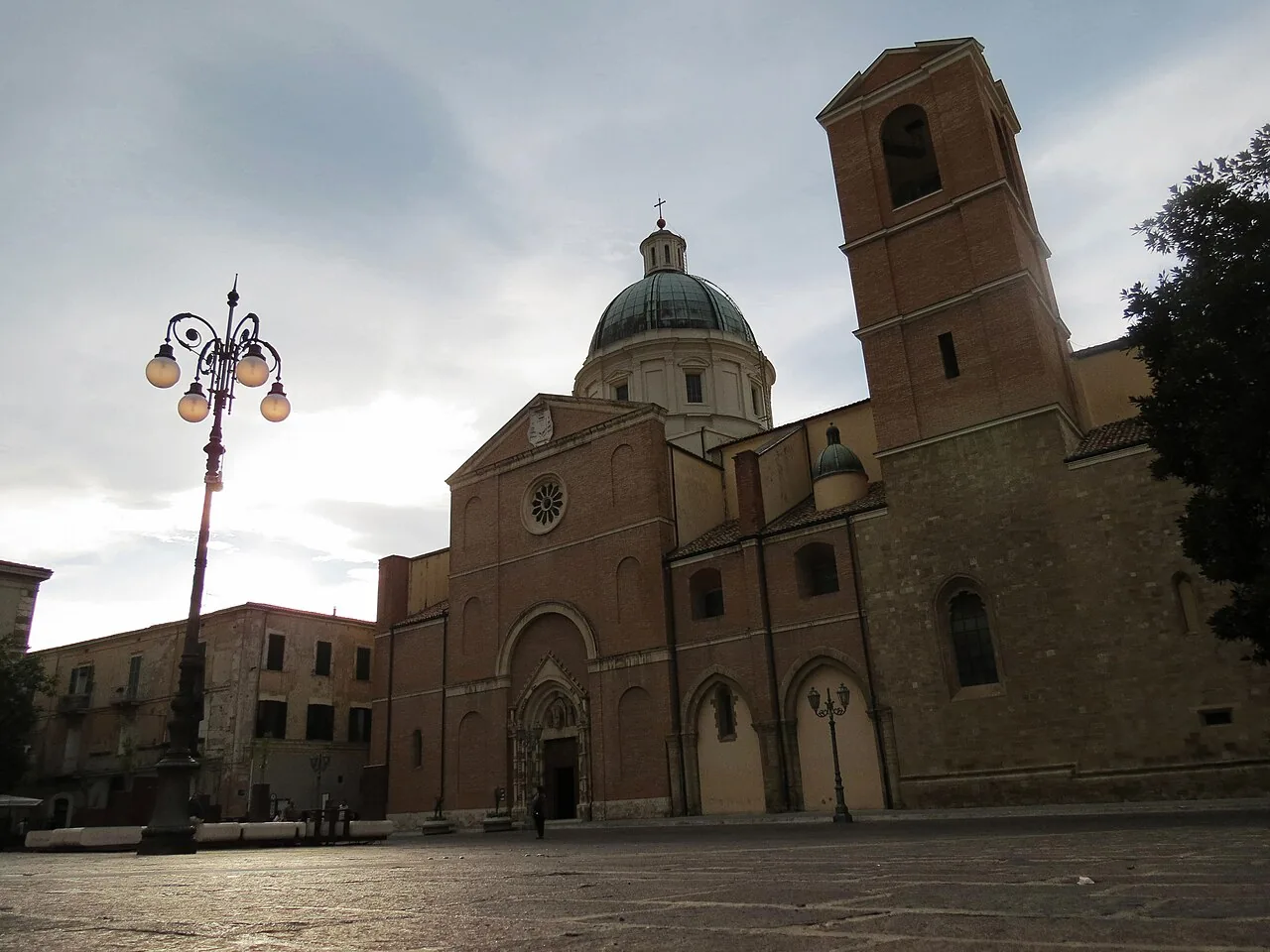
San Tommaso Apostolo Cathedral in Ortona. The complex is the devotional location for Thomas’s relics reported by the basilica’s custodians.
Glenda Trubiano · CC BY-SA 3.0 · Photo source · 1 October 2013 · Resized and converted to WebP.Ortona · Italy
Basilica di San Tommaso Apostolo · Cripta
Location reported by institutional sources
The cathedral reports keeping Thomas’s relics in its crypt’s altar-tomb, brought from Chios in 1258. A Greek-inscribed tombstone associated with the transfer is also preserved in the crypt. The recorded movement of these objects is distinct from proving the identity of a first-century individual.